Cuisinart Coffee Maker Leaking From the Bottom

Water appearing under a Cuisinart is more often an overflowing brew basket than a failed seal. Coffee ground too fine or overfilled backs up, spills over the basket rim and runs down the inside of the housing to the counter. Coarsen the grind and reduce the dose before assuming the machine has failed.
Causes, most likely first
Work down this list in order. The first two cost nothing to check.
- Brew basket overflowing - grind too fine or too much coffee, water backs up and spills
- Carafe lid missing or wrong, so the drip-stop valve never opens and the basket floods
- Gold-tone filter torn or blocked, restricting the basket outlet
- Water reservoir overfilled past MAX and venting as the machine heats
- Genuine seal failure at the tank or tubing - the least common of the five
The fix, step by step
-
Dry it and lay a towel
Dry the machine and the counter completely, then put a paper towel underneath so you can see where water arrives first.
-
Brew and watch the basket
Lift the lid mid-brew and look. If water is pooling above the grounds and creeping toward the rim, you have found it - and it is not a leak.
-
Coarsen the grind
Go one step coarser and reduce the dose. Fine coffee packs down and drains slower than water arrives.
-
Check the carafe lid
The lid has to press the drip-stop valve open when the carafe is home. No lid, wrong lid or a warped one and the basket fills.
-
Inspect the gold-tone filter
A torn mesh lets grounds block the outlet; a clogged one restricts flow. Wash it properly or replace it.
-
Check the reservoir level
Filled past MAX, water vents as the machine heats and runs down the back.
-
Only then suspect a seal
If the basket stays clear through a whole brew and the towel still wets, the leak is a tank or tubing seal.
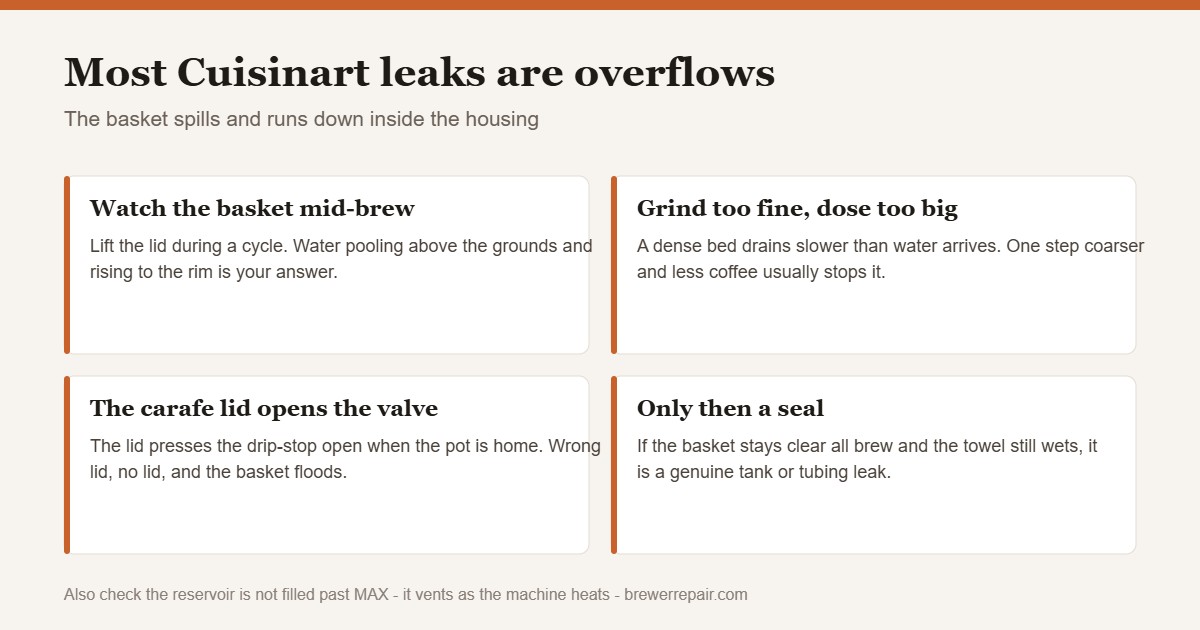
The most useful thing to know about this complaint is that most of the time nothing has actually failed. The basket overflows, coffee runs down the inside of the housing and appears at the base, and from the counter that is indistinguishable from a leak.
Look at the basket during a brew
This is the whole diagnosis. Start a brew, lift the lid and watch. If water is pooling above the coffee bed and rising toward the rim, you have your answer and no part will fix it.
What you are seeing is a bed that drains slower than water arrives. Two things cause that: coffee ground too fine, or too much of it.
Coarsen and reduce
Go one step coarser on the grinder and cut the dose. Fine grounds pack into a dense mat under the weight of water, and once that happens flow drops off a cliff. This costs nothing and resolves a large share of these cases.
The lid is doing more than you think
On most Cuisinart drip machines the carafe lid presses the drip-stop valve open when the pot is pushed home. A missing lid, a lid from a different pot, or one that has warped means the valve stays closed – and a basket that cannot drain floods within a minute.
If your machine started doing this after you replaced the carafe, this is almost certainly why.
The gold-tone filter
A permanent mesh filter that is torn lets grounds through to block the outlet below it. One that is clogged with oils restricts flow directly. Either produces the same overflow. Wash it properly with detergent – rinsing does not shift coffee oil.
The reservoir
Filled past the MAX line, water vents as the machine heats and runs down the back of the housing. This one is easy to miss because it looks like it is coming from underneath.
When it really is a seal
If the basket stays clear through an entire brew and the towel under the machine still wets, you have a genuine leak. Check the timing: wet while the machine is idle means gravity through a split or perished seal; wet only while it is running means a pressure joint. On an inexpensive drip machine, an internal seal failure is usually a replacement decision rather than a repair.
Parts
The brew basket, holder and gold-tone filter are three separate parts and the page covers which is which. Carafe fitment matters if the lid is the problem, and the charcoal water filter covers the other consumable.
If you need the part
Check the fitment chart against your model number before ordering — sizes that look identical often are not.

The part you need
Cuisinart Filter Basket Replacement: Brew Basket by Model
Paid link. We earn a commission if you buy — the guides stay free.
Questions people ask about this fix
Why is my Cuisinart coffee maker leaking from the bottom?
Usually it is not leaking. The brew basket overflows, coffee runs down inside the housing and emerges at the base, which looks exactly like a leak from the counter. Lift the lid during a brew and watch the basket before assuming anything has failed.
Can grind size really cause a leak?
Yes, and it is the most common cause of this complaint. Coffee ground too fine packs into a dense bed that drains slower than water arrives, so the basket fills and spills over the rim. One step coarser usually stops it.
How does the carafe lid cause an overflow?
On most Cuisinart machines the lid physically pushes the drip-stop valve open when the carafe is pushed home. Without the right lid the valve stays shut, the basket has nowhere to drain and it floods.
My basket is clear and it still leaks. What now?
Then you probably do have a seal failure at the tank or in the tubing. Check whether it wets the towel with the machine idle - if it does, it is gravity through a split or a perished seal rather than a pressure leak.
Is a leaking Cuisinart worth repairing?
If it is the basket, the grind or the lid, absolutely - those cost nothing or a few dollars. A genuine internal seal failure on an inexpensive drip machine is usually not worth the labour, and that is a replacement decision rather than a repair one.