Black+Decker 12-Cup Carafe: Matching the GC and TC Codes

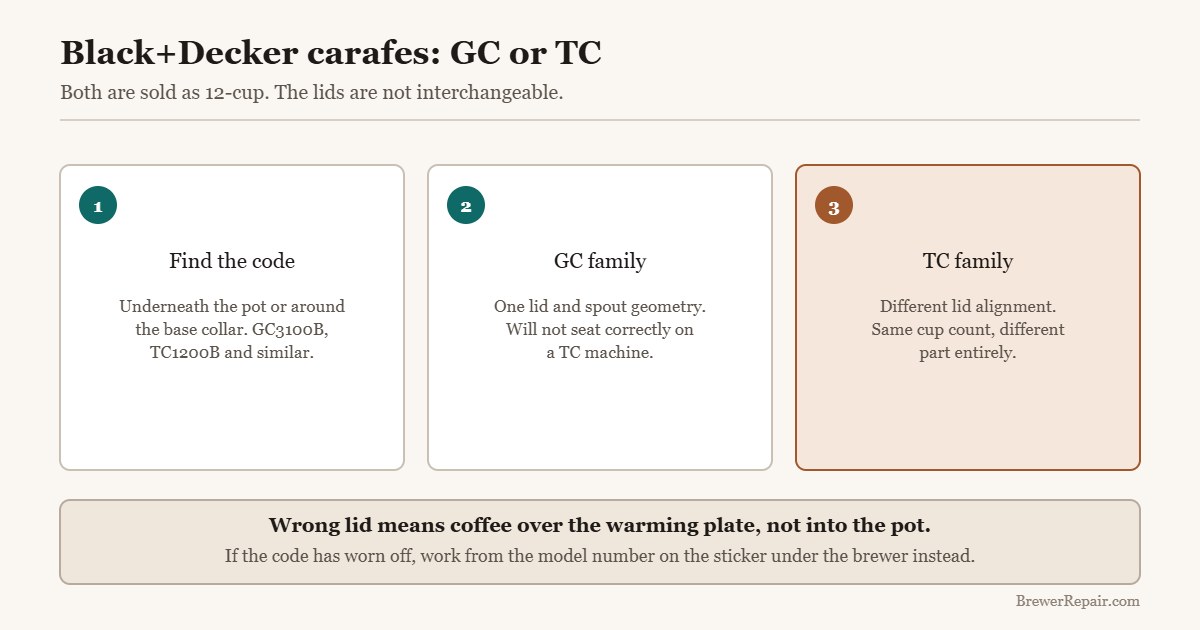
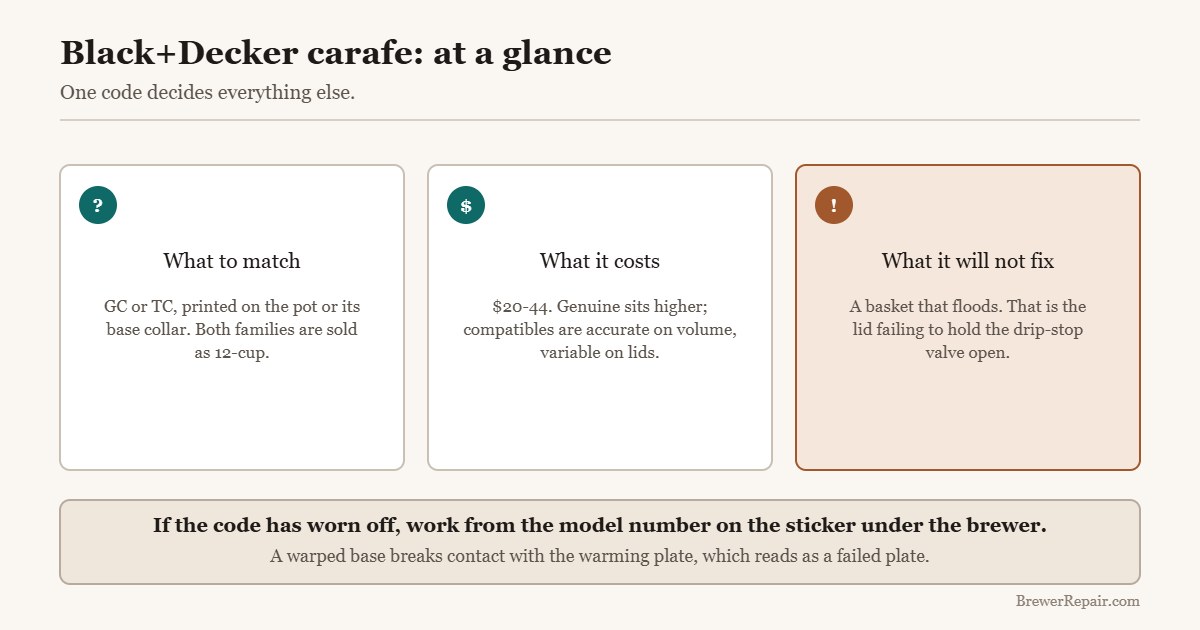
Match the GC or TC code printed on the carafe or its collar. Both families are sold as 12-cup Black+Decker carafes but the lids are not interchangeable.
Also sold as: Compatible 12-cup carafes listing GC and TC model codes
Does it fit your machine?
Match your model number exactly — the code on the rating label, not the name on the front of the machine.
| Model | Notes |
|---|---|
| GC series brewers | GC-coded carafe |
| TC series brewers | TC-coded carafe |
| Thermal carafe models | Not interchangeable with glass |
Your model is not on this list. Do not assume it fits — send us the model number and we will check it.
OEM or aftermarket?
Black+Decker replacement carafes are unusually easy to get right, because the pots themselves carry a part code. Look at the underside of your broken carafe or the collar around its base: you are looking for something like GC3100B or TC1200B. That code, not the cup count, is what listings match.
Carafe for your code:

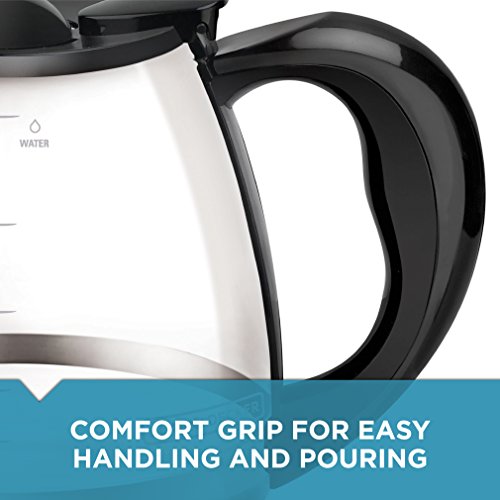
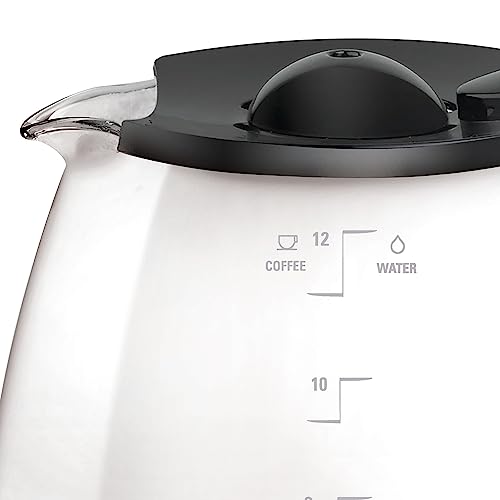
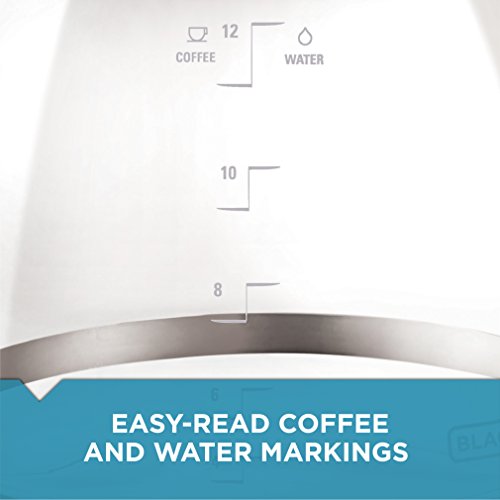
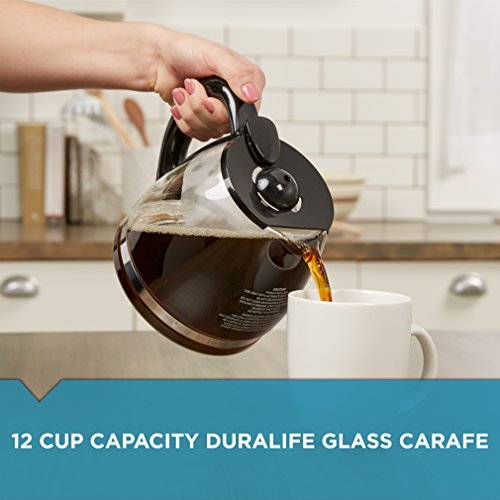
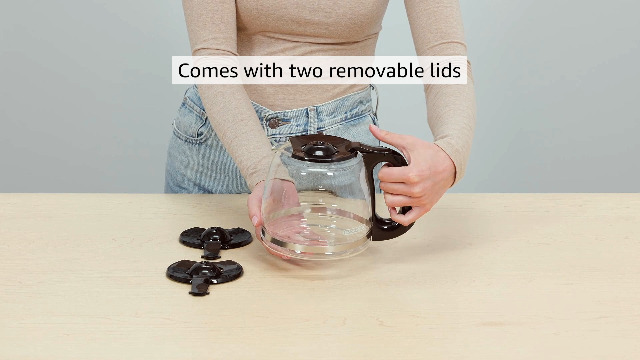
Prime Black+Decker GC3100B TC1200B 12-Cup Replacement Carafe, Black Handle


As an Amazon Associate we earn from qualifying purchases. Product prices and availability are accurate as of the date/time indicated.
GC or TC – and why it matters
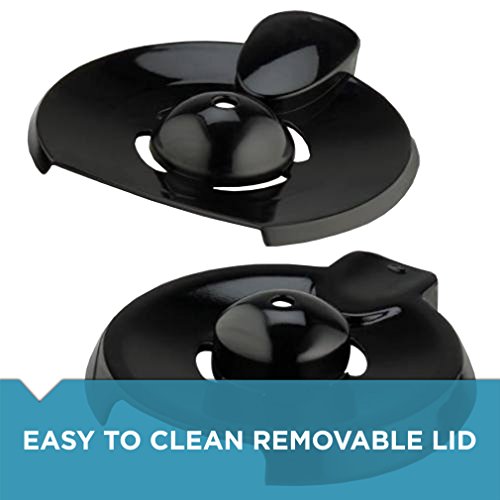
The two prefixes are different families. Ordering across them is the most common mistake, because both are sold as “12-cup Black+Decker carafe” and both hold twelve cups. What differs is the lid and the spout geometry, and a lid that does not align with the basket outlet means coffee over the warming plate rather than into the pot.
If the code has worn off the old pot, work from the brewer instead: the model number is on the sticker underneath the machine, and the carafe listing will name the brewers it fits.
Genuine versus compatible
Genuine Black+Decker carafes exist and are the safe pick if your machine has a brew-through lid. Compatible 12-cup pots are cheaper and generally accurate on volume and footprint. Where compatibles vary is the lid hinge and the notch that trips the drip-stop valve, so if your listing does not name your exact code, expect to check the lid before the first brew.
Before you blame the carafe
- Coffee overflows the basket. The lid is not seating, so the drip-stop stays shut. This is a lid problem, not a pot problem.
- Coffee cools fast. Check the pot sits flat on the plate. A warped base or a corroded plate breaks contact and the keep-warm never works properly.
- A hairline crack near the base. Replace now rather than later – glass cracks spread every time they are heated.
Making a glass carafe last
Thermal shock breaks far more carafes than drops do. Do not pour cold water into a hot pot, do not set a hot pot on a wet worktop, and let it cool before washing. See also other drip coffee maker repairs.
Where the code is, and what it means
Black+Decker moulds a part code into the carafe itself — around the base collar, or printed underneath. It looks like GC3100B or TC1200B. The letters are the family and the digits are the series within it.
If the pot is already broken and unreadable, the brewer’s own model number is on the sticker underneath the machine, and carafe listings name the brewers they fit. Either route works; the cup count alone does not.
What actually differs between GC and TC
Both hold twelve cups and both look similar in a listing photo. The differences are in the parts that interact with the machine:
- Lid geometry. A brew-through lid has to line up with the basket outlet. Misaligned, coffee runs onto the warming plate instead of into the pot.
- The drip-stop notch. The lid holds open a valve in the basket. A lid that does not reach it leaves the valve shut and the basket floods within a minute of brewing.
- Spout profile. Affects pouring more than function, but a mismatched spout dribbles down the side.
Three faults that are not the carafe
- Basket overflow. Almost always the lid not seating. Fit the lid, look at the back edge, and check it contacts the drip-stop lever.
- Coffee going cold fast. The pot is not making contact with the warming plate. Look for a warped base, or corrosion and coffee residue baked onto the plate itself.
- A burnt taste after twenty minutes. That is the warming plate doing its job too well, not a carafe problem. Decant into a thermos instead.
Genuine or compatible
Genuine Black+Decker carafes are the safe answer when your machine uses a brew-through lid, because that is where compatibles vary most. Compatible pots are accurate on volume and base diameter and noticeably cheaper.
The practical rule: if a listing names your exact GC or TC code, a compatible is fine. If it lists twenty models at once without naming yours, expect to check lid fit before the first brew.
Making glass last
Thermal shock breaks far more carafes than drops. Never rinse a hot pot under a cold tap, never set one on a wet stone worktop, and switch the warming plate off once the pot is empty — an empty carafe left on a hot plate is the most common way people cook the base of their own pot.
Related on BrewerRepair: Cuisinart Carafe Replacement and Ninja Replacement Carafe and Cuisinart Charcoal Water Filters.
Black+Decker replacement carafes
Check your GC or TC code against the listing before ordering.
Where to buy it
Black+Decker
Black+Decker 12-Cup Carafe: Matching the GC and TC Codes
Paid link. Price shown is indicative — check the listing for the current price. We earn a commission at no extra cost to you.
Questions about this part
Where is the code on a Black+Decker carafe?
Underneath the pot or around the base collar - something like GC3100B or TC1200B.
Can I use a GC carafe on a TC machine?
Not reliably. Both hold twelve cups but the lid and spout differ, and a mismatched lid floods the basket.
My new carafe still overflows - why?
The lid is not seating, so the drip-stop valve stays closed. Check lid fit before assuming the carafe is wrong.