Breville BWF100 Water Filter: What Fits and How Often

The BWF100 charcoal cartridge fits most of the Breville range. Change it every two to three months. It protects against chlorine and sediment, not limescale.
Also sold as: Compatible resin and charcoal cartridges for the BWF100 holder
Does it fit your machine?
Match your model number exactly — the code on the rating label, not the name on the front of the machine.
| Model | Notes |
|---|---|
| Barista Express (BES870XL) | BWF100 holder in the reservoir |
| Barista Pro | BWF100 |
| Precision Brewer | BWF100 |
| Bambino | No filter holder on some variants - check the reservoir |
Your model is not on this list. Do not assume it fits — send us the model number and we will check it.
OEM or aftermarket?
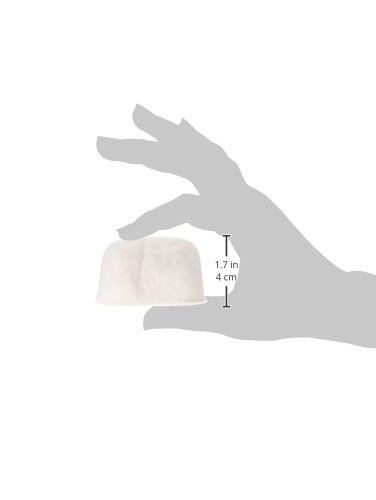
Breville’s water filter is a small charcoal cartridge that clips into the reservoir, sold as the BWF100. It fits across much of the range, and there are compatible resin versions from other makers that use the same holder.
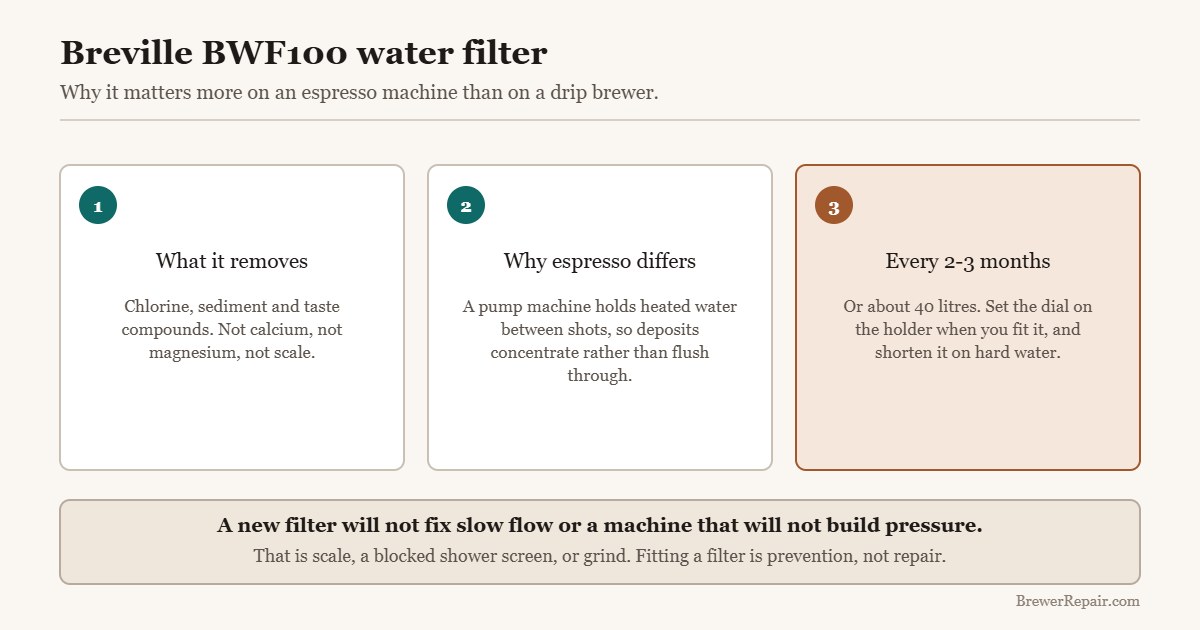
The BWF100 cartridge:
Prime Breville BWF100 Charcoal Replacement Water Filters, 6 pack



As an Amazon Associate we earn from qualifying purchases. Product prices and availability are accurate as of the date/time indicated.
Why it matters more on an espresso machine
On a drip machine a water filter is a taste improvement. On a pump espresso machine it is also a protection measure, because the machine holds heated water in a boiler or thermoblock between shots. Chlorine and sediment concentrate there, and the deposits that form are harder to shift than in a drip machine that empties itself every brew.
It still does not stop limescale. Charcoal and resin cartridges reduce chlorine and particulates; calcium and magnesium pass through. On a Breville, descaling stays on its own schedule and the machine will tell you when it wants one.
Change interval
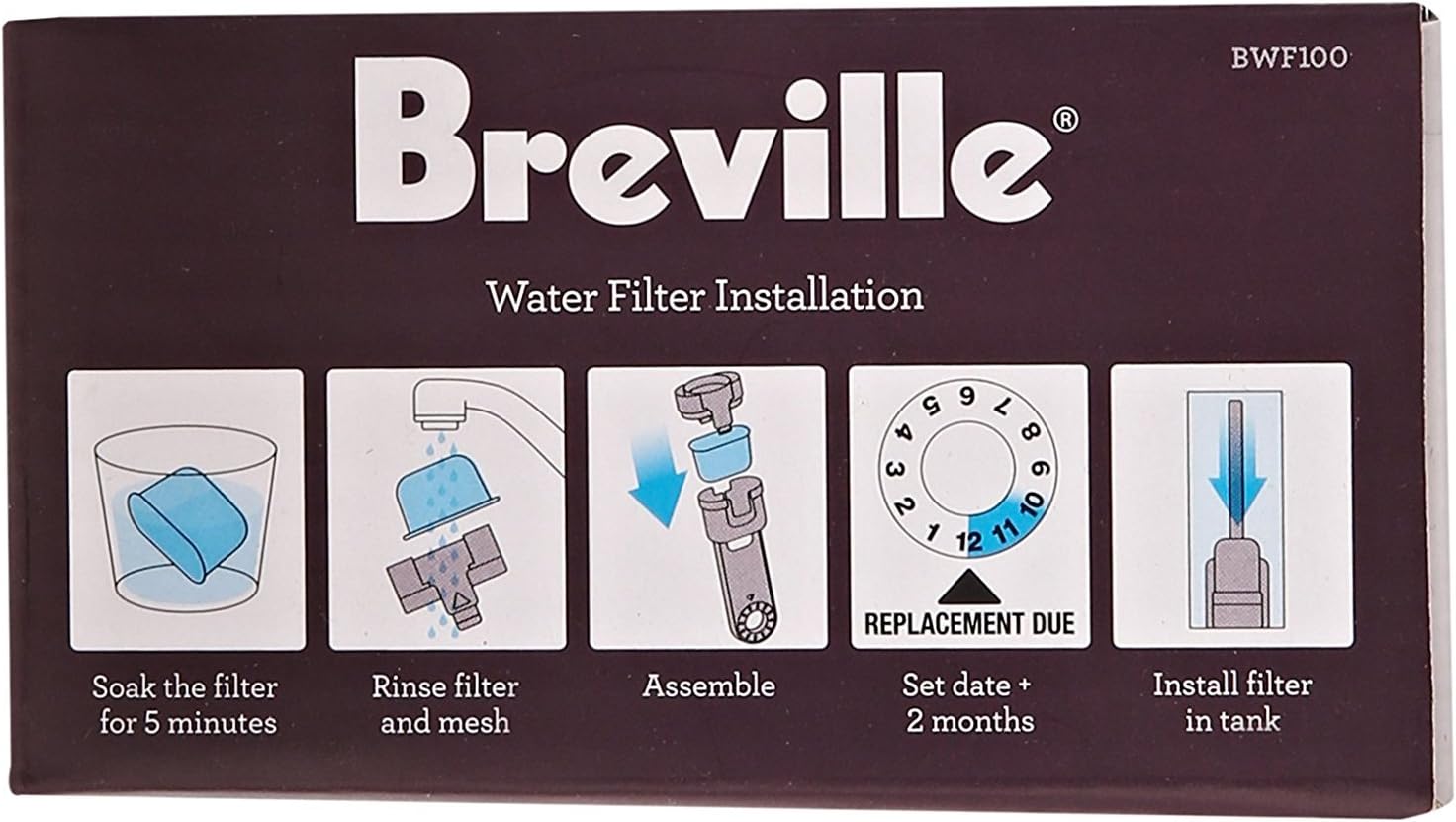
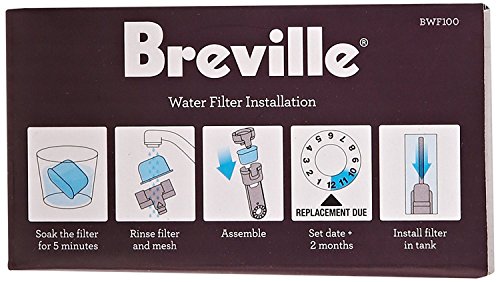
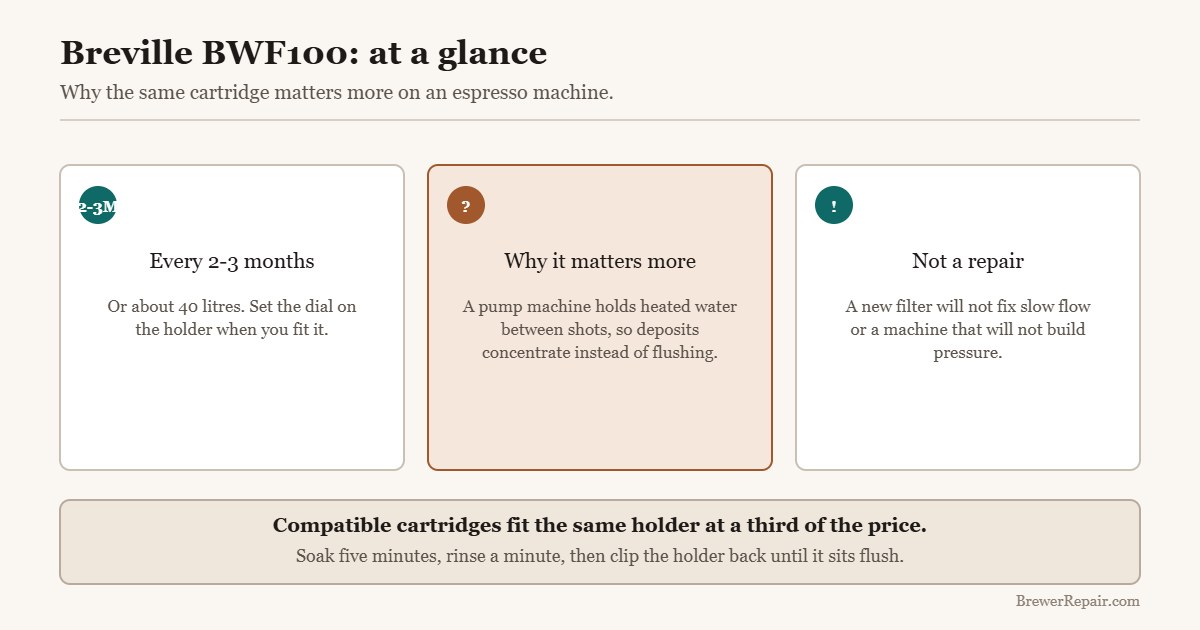
Every two to three months, or roughly every 40 litres, whichever comes first. On hard water, shorten it. The holder has a dial – set it when you fit the cartridge, because nobody remembers otherwise.
Fitting
- Soak the new cartridge in cold water for five minutes.
- Rinse it under running water for about a minute to clear loose carbon.
- Split the holder, swap the cartridge, set the month dial.
- Clip the holder back into the reservoir – it should sit flush, not proud.
If the machine is already slow
A new filter will not fix slow flow or a machine that will not build pressure. That is scale, a blocked shower screen, or a grind that is too fine. Fitting a filter is prevention, not repair. See Breville repairs and parts for the diagnosis side.
Why a pump machine treats water differently
A drip brewer heats water once and sends it straight out. A pump espresso machine holds heated water in a thermocoil or boiler between shots, sometimes for hours if the machine is left on. Anything dissolved in that water concentrates as it sits and evaporates, and deposits form on hot metal rather than in a plastic tank.
That is why the same water produces visible problems sooner on an espresso machine, and why the filter is worth fitting even though it does nothing about scale.
What the cartridge removes
- Chlorine — the main taste offender, and the reason espresso from filtered water reads cleaner and sweeter.
- Sediment and particulates — these matter mechanically as well as in the cup, because grit reaches the pump and the solenoid.
- Some heavy metals and organics — a secondary benefit rather than the reason to fit one.
What it leaves untouched is calcium and magnesium. Those are the scale-forming minerals, they pass straight through charcoal, and they are the reason the machine still asks to be descaled on schedule.
Interval, and the number that actually governs it
Two to three months, or roughly 40 litres, whichever comes first. For most households the volume limit arrives first if you pull several shots a day, and the time limit arrives first if you use the machine at weekends.
Set the dial on the holder when you fit the cartridge. It is the only reminder you get, and a cartridge left in for six months is worse than none — saturated charcoal releases what it has captured rather than holding it.
Genuine BWF100 or compatible
The BWF100 is Breville’s own charcoal cartridge. Several makers produce cartridges for the same holder, some charcoal and some resin-based. Dimensionally they fit; the resin ones claim additional softening, which in practice is modest.
Cost is the real difference: genuine packs run substantially more per cartridge than well-reviewed compatibles. At six cartridges a year the gap is real but not large, so buy whichever you will actually change on time.
Fitting it so it works
- Soak the new cartridge in cold water for five minutes so the charcoal wets through.
- Rinse it under running water for about a minute to wash out loose carbon.
- Split the holder, swap the cartridge, and set the month dial.
- Clip the holder back into the reservoir until it sits flush — proud means water bypasses it.
What it will not fix
A new filter does not restore flow on a machine that has slowed, does not raise pressure, and does not make a sour shot sweet. Those are scale, grind and dose problems respectively. Fitting a filter is prevention — the point is that the machine you have in two years is in better condition, not that today’s shot changes.
Related on BrewerRepair: Breville Portafilter and Breville Espresso Machine Not Building Pressure and Descaling a Breville Barista Express.
Breville water filters
The BWF100 cartridge and compatible equivalents for the same holder.
Breville BWF100 Charcoal Replacement Water Filters, 6 pack
Where to buy it
Breville
Breville BWF100 Water Filter: What Fits and How Often
Paid link. Price shown is indicative — check the listing for the current price. We earn a commission at no extra cost to you.
Questions about this part
What is the Breville water filter part number?
BWF100. Compatible cartridges from other makers fit the same holder.
How often should I change a Breville water filter?
Every two to three months, or about 40 litres. Sooner on hard water.
Does the filter mean I can skip descaling?
No. Charcoal does not remove the minerals that form scale.