Fellow Kettle Not Heating: Contacts, Cut-Out and Scale

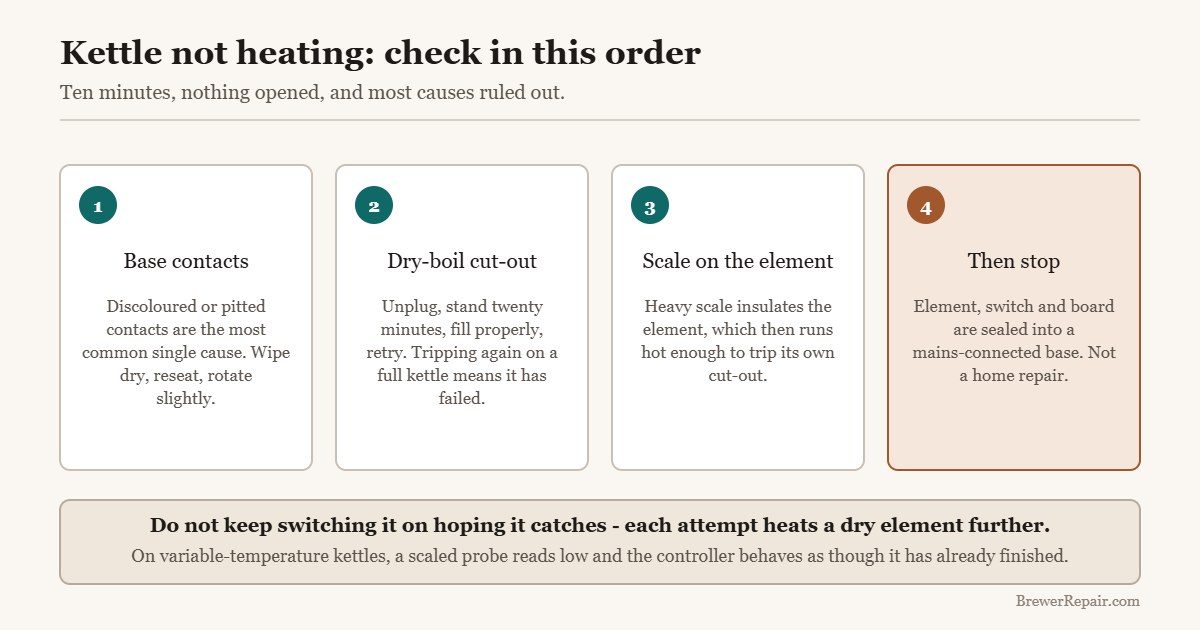
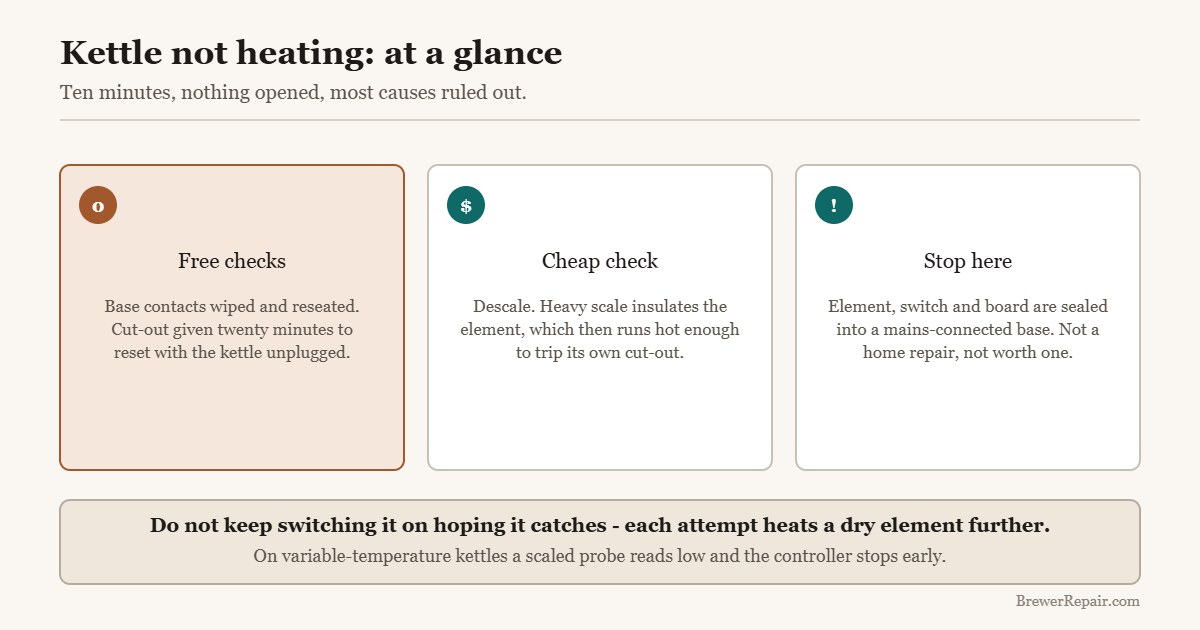
Check the base contacts first, then let a tripped dry-boil cut-out reset for twenty minutes, then descale. If it still will not heat, the element or switch has failed and a kettle is not worth repairing.
Causes, most likely first
Work down this list in order. The first two cost nothing to check.
- Discoloured or corroded base contacts
- Dry-boil thermal cut-out tripped and not yet reset
- Heavy scale insulating the element
- Scaled temperature probe misreading on variable-temperature models
- Failed element, switch or control board
The fix, step by step
-
Check the contacts
Look at the base plate and the ring under the kettle. Wipe dry and reseat firmly.
-
Let the cut-out reset
Unplug, stand twenty minutes, fill properly, try again.
-
Descale
Boil with solution, stand 20-30 minutes, rinse. Heavy scale can trip the cut-out itself.
-
Check the probe
On variable-temperature models a scaled probe misreads and the controller misbehaves.
-
Stop at the element
Element, switch and board are sealed and mains-connected. Not a home repair.
Electric kettles fail in a small number of ways, and the useful thing about that is you can rule most of them out in ten minutes without opening anything. Work through these in order – each is quicker and cheaper than the next.
Before you replace it:

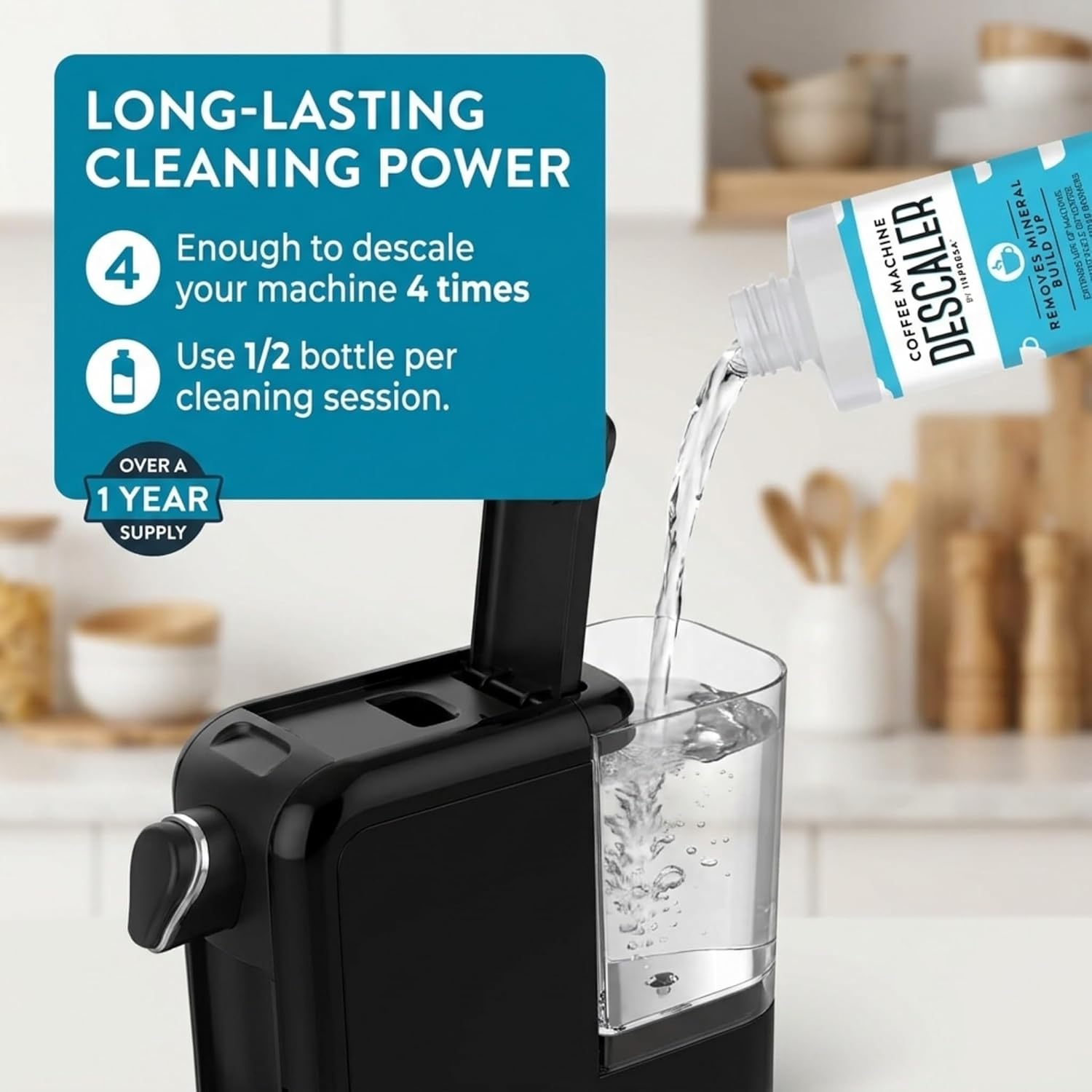
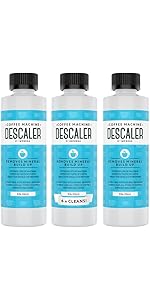
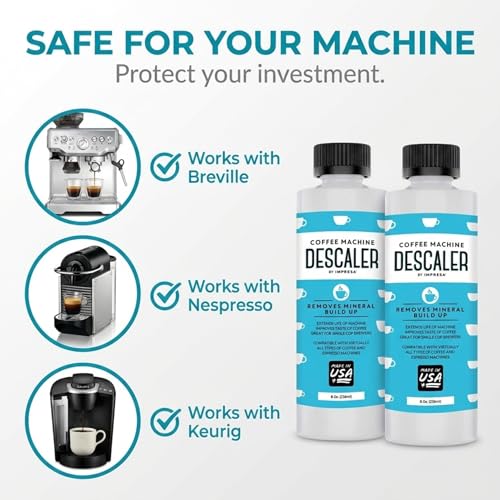
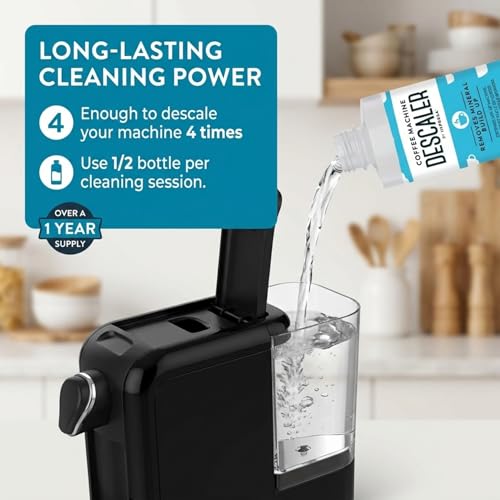
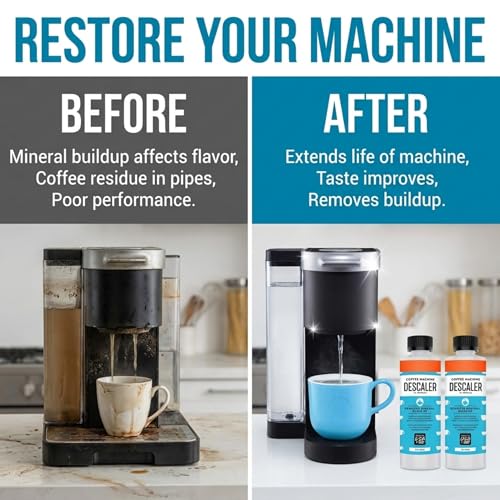
Prime IMPRESA Coffee Machine Descaler (2 Uses Per Bottle) - Made in the USA - Universal Descaling Solution, Compatible with Nespresso, Delonghi and All Single Use Coffee and Espresso Machines








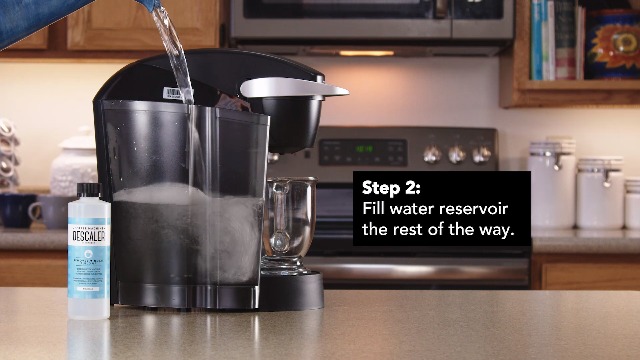
As an Amazon Associate we earn from qualifying purchases. Product prices and availability are accurate as of the date/time indicated.
1. Is it the kettle or the base?
Lift the kettle off, look at the contact plate in the base and the matching ring underneath the kettle. You are looking for discoloured, pitted or corroded contacts, and for water in the base. If the display lights but nothing heats, poor contact is the most common single cause.
Wipe both surfaces dry, seat the kettle firmly, and rotate it a little on the base. If it heats intermittently as you move it, the contacts are the fault.
2. Has the dry-boil cut-out tripped?
Every kettle has a thermal cut-out that trips if it is switched on empty or near-empty. On most it resets once the element cools. Unplug the base, leave the kettle to stand for twenty minutes, fill it properly, then try again. A cut-out that trips repeatedly on a full kettle is a failed cut-out, not a user error.
3. Scale on the element
Heavy scale insulates the element from the water, and a heavily scaled kettle can trip its own cut-out because the element runs hotter than the water. If there is a chalky white layer inside, descale it properly before drawing any conclusions – boil with solution, then stand twenty to thirty minutes, then rinse.
4. Temperature-control models: the probe
On a variable-temperature kettle a scaled temperature probe reads low, and the controller can behave strangely as a result – stopping early, holding at the wrong temperature, or appearing not to heat at all when it thinks it has already arrived. Descaling usually restores it. This is worth checking before deciding the electronics have failed.
5. Where repair stops paying
If the contacts are clean, the cut-out has been given time to reset, the kettle is descaled and it still will not heat, the remaining candidates are the element, the switch or the control board. On a kettle those are sealed into the base, mains-connected, and rarely available as parts. This is the point to stop: an appliance that holds a litre of boiling water on a compromised element is not something to experiment with.
What not to do
Do not run it repeatedly hoping it catches – each attempt heats a dry or badly-contacted element further. Do not immerse the kettle body or the base. And do not open a kettle base to “have a look” unless it is unplugged and you know what you are looking at.
Base contacts: the fault that looks electrical
Every corded kettle transfers power through a ring connector in the base and a matching plate under the kettle. Both are exposed to steam and to whatever spills down the side. Over a couple of years they discolour, and a light oxide layer is enough to make the connection intermittent.
The tell is behaviour that changes when you move the kettle: it heats if you nudge it, or it works on some placements and not others. Wipe both surfaces dry with a cloth — not with abrasive, which removes the plating — reseat firmly, and try again.
How the dry-boil cut-out works
A bimetallic strip near the element bends when it gets hotter than water alone would make it, and that opens the circuit. It is designed to save the kettle when someone switches it on empty, and it resets when the element cools.
Two things follow. First, after a dry-boil event you have to wait — twenty minutes is usually enough, and pressing the switch repeatedly during that time does nothing. Second, a cut-out that trips on a properly filled kettle is either responding to a heavily scaled element or has failed, and the difference matters for what you do next.
Why heavy scale trips the cut-out
Scale is an insulator. The element still produces the same heat, but less of it reaches the water, so the element itself runs hotter. The cut-out reads element temperature. A kettle that has never been descaled can therefore trip its own protection while full of water — and it will keep doing it until the scale is removed.
This is worth trying before writing the kettle off, because it is a $10 fix for what looks like a dead appliance.
Temperature-control models
A variable-temperature kettle reads a probe. Scale on the probe insulates it, the reading runs low relative to the water, and the controller behaves oddly: stopping early, holding at the wrong temperature, or appearing not to heat because it thinks it has already arrived. Descale before concluding the electronics have failed.
Where home repair stops
Element, switch and control board sit in a sealed, mains-connected base on essentially every modern kettle. They are not sold as parts, the base is not designed to be opened, and the appliance holds a litre of boiling water directly above the components you would be working on.
If contacts are clean, the cut-out has been given time, and a descale has been run, that is the end of it. Recycle the kettle rather than experimenting — and note that a kettle is one of the few kitchen appliances where replacement is genuinely cheaper than any paid repair.
See also: what to descale a kettle with, and other kettle repairs.
What to try before replacing it
Descaling is the last cheap step. After that a kettle is not economically repairable.

If you need the part
Check the fitment chart against your model number before ordering — sizes that look identical often are not.
The part you need
Descaling an Electric Kettle: What to Use and How Often
Paid link. We earn a commission if you buy — the guides stay free.
Questions people ask about this fix
My kettle lights up but does not heat. Why?
Most often poor base contact or a tripped dry-boil cut-out. Both are free to check.
How long does a kettle cut-out take to reset?
Around twenty minutes once the element has cooled. If it trips again on a full kettle, the cut-out has failed.
Can scale stop a kettle heating?
Yes. Heavy scale insulates the element, which then runs hot enough to trip its own cut-out.
Is a kettle worth repairing?
Rarely. Element, switch and board are sealed into a mains-connected base and are not usually available as parts.