Descaling an Electric Kettle: What to Use and How Often

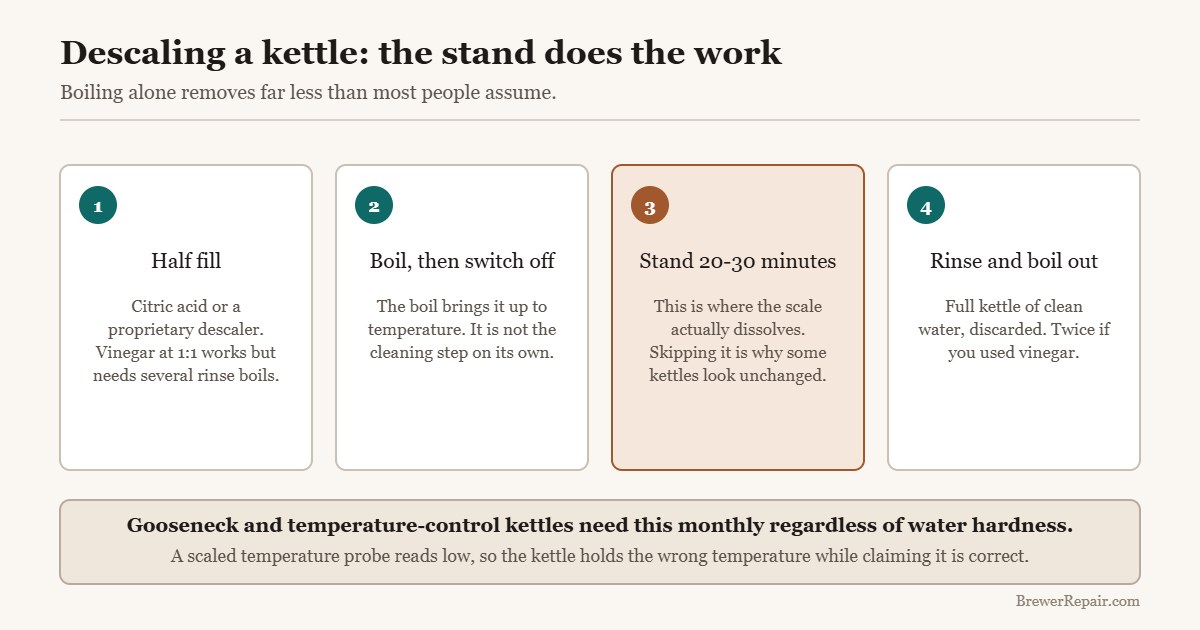
Citric acid or a proprietary descaler, half full, boiled then left to stand 20-30 minutes. The stand does the work. Monthly on hard water.
Also sold as: Citric acid powder; white vinegar at 1:1
Does it fit your machine?
Match your model number exactly — the code on the rating label, not the name on the front of the machine.
| Model | Notes |
|---|---|
| Standard electric kettles | Any descaler or citric acid |
| Gooseneck pour-over kettles | Monthly, and check the spout afterwards |
| Variable-temperature kettles | Monthly - a coated probe misreads temperature |
| Stovetop kettles | Same procedure |
Your model is not on this list. Do not assume it fits — send us the model number and we will check it.
OEM or aftermarket?
A kettle is the simplest appliance in the kitchen and the one that scales fastest, because every millilitre of water it boils leaves its minerals behind on the element. On hard water a neglected kettle takes noticeably longer to boil, rattles while heating, and eventually sheds flakes into the cup.
What to descale with:

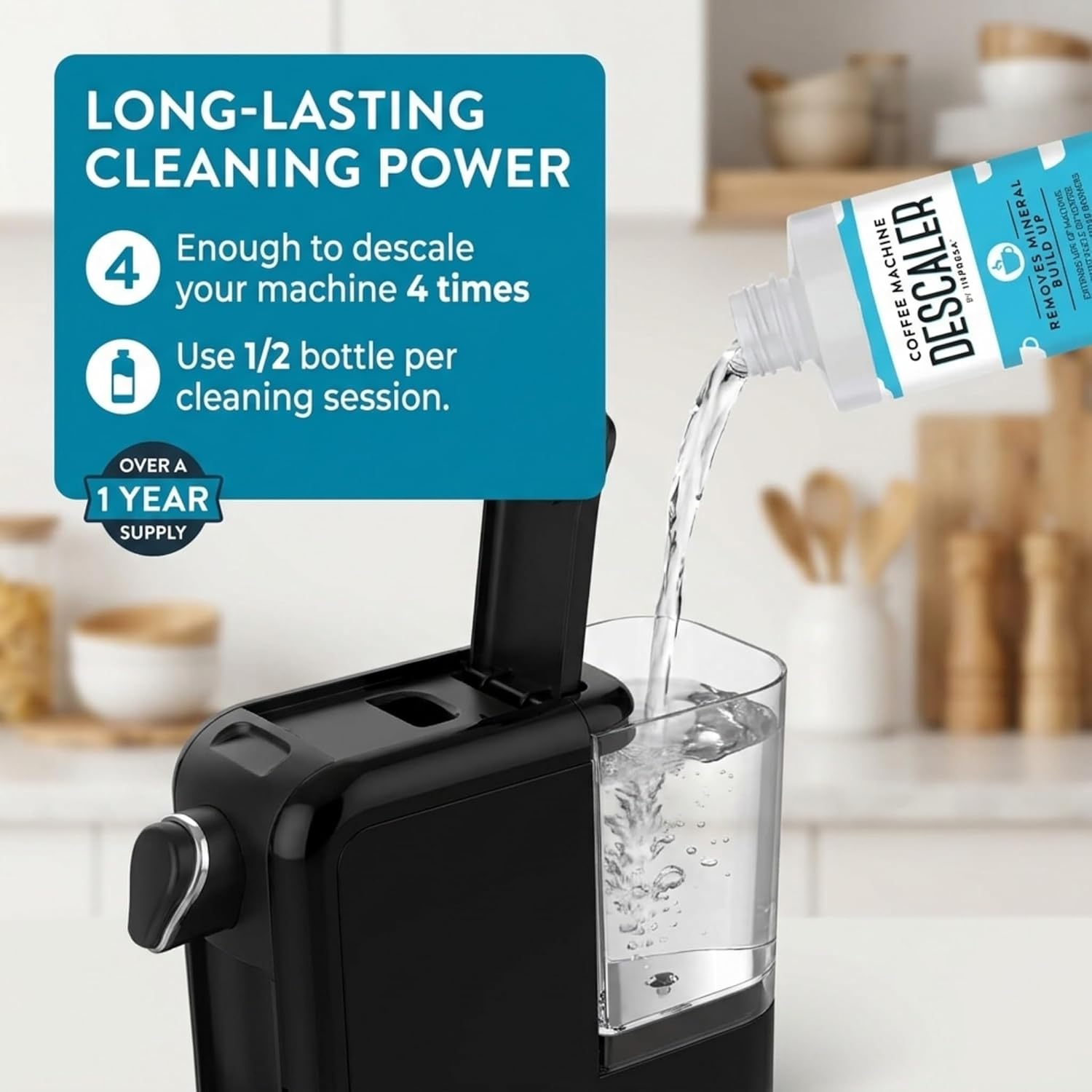
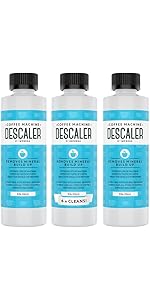
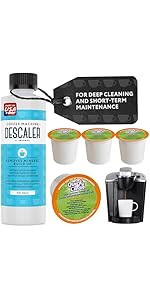
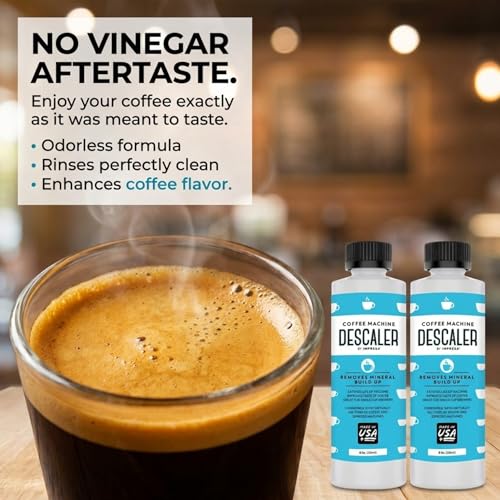
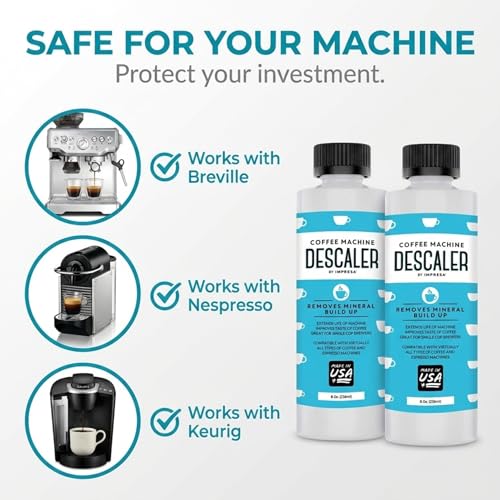
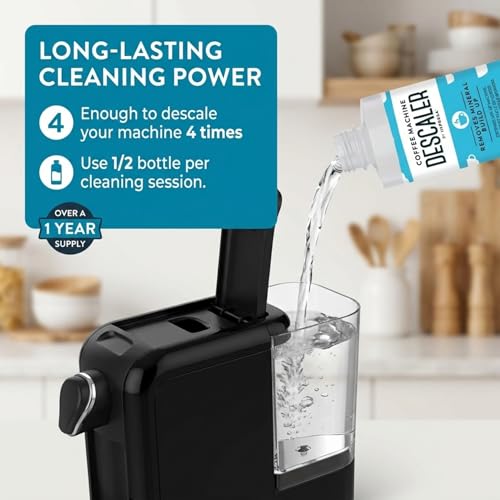
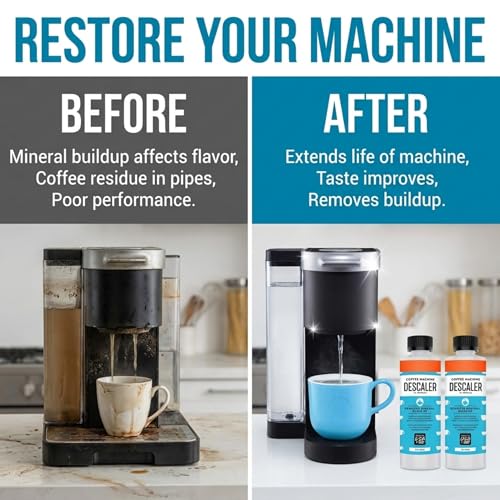
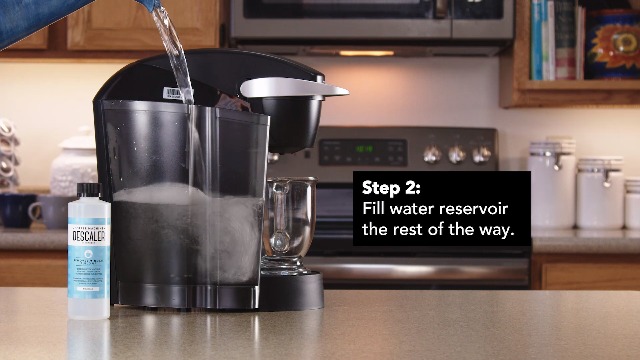
Prime IMPRESA Coffee Machine Descaler (2 Uses Per Bottle) - Made in the USA - Universal Descaling Solution, Compatible with Nespresso, Delonghi and All Single Use Coffee and Espresso Machines






As an Amazon Associate we earn from qualifying purchases. Product prices and availability are accurate as of the date/time indicated.
What to use
- Citric acid or a proprietary descaler – fastest, no lingering smell, and gentler on stainless steel than vinegar.
- White vinegar at 1:1 with water – works, costs almost nothing, and needs several rinse boils afterwards.
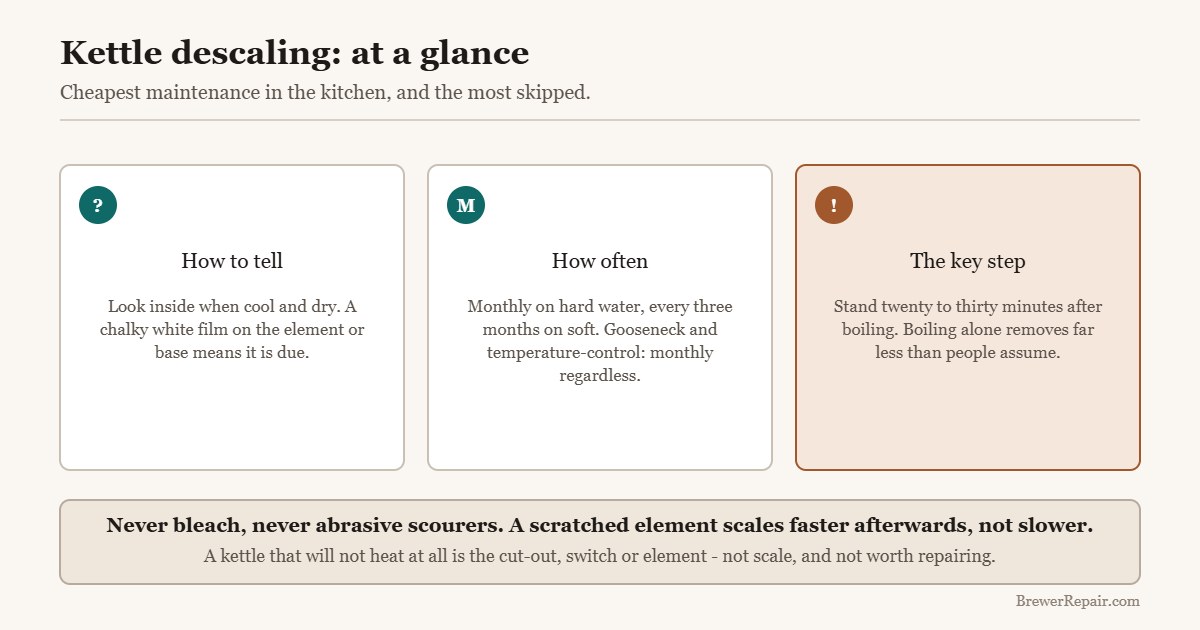
- Never bleach, never abrasive scourers. A scratched element scales faster afterwards, not slower.
How often
Monthly on hard water, every three months on soft. The visual test is easier than any schedule: look inside when it is cool and dry. A chalky white film on the element or base means it is due.
The procedure
- Fill to about half with your descaling solution.
- Bring it to the boil, then switch off and leave it to stand for twenty to thirty minutes. The stand does the work; boiling alone does much less.
- Pour out and rinse thoroughly.
- Boil a full kettle of clean water and discard it. Repeat once more with vinegar.
Gooseneck and temperature-control kettles
Pour-over kettles need more attention, not less. The narrow spout traps flakes, and the temperature probe on a variable-temperature model reads badly once it is coated – which shows up as water that is not actually at the temperature the display claims. Descale those monthly regardless of water hardness, and check the spout by pouring through it into a clear glass afterwards.
When scale is not the problem
A kettle that will not heat at all is not a scale problem. That is the thermal cut-out, the switch or the element, and on most kettles it is not economically repairable. See kettle repairs before buying anything.
What scale does to a kettle, in order
Scale forms on the hottest surface first, which is the element or the base plate above it. The progression is predictable:
- Longer boil times. Mineral crust insulates the element from the water, so more energy goes into the crust and less into the water.
- Rattling and popping. Steam forms under the deposit and escapes explosively. This is the noise people describe as the kettle “getting louder with age”.
- Flakes in the cup. The deposit sheds as it thickens.
- Cut-out tripping early. The element runs hotter than the water it is heating, and the thermal protection responds to element temperature.
That last stage is why a heavily scaled kettle can look like an electrical fault.
Citric acid, vinegar, or a proprietary descaler
- Citric acid powder — cheapest per use, no smell, dissolves scale quickly. A tablespoon in a half-full kettle is the usual dose.
- Proprietary descaler — the same chemistry, pre-measured, with corrosion inhibitors. Convenient rather than better.
- White vinegar at 1:1 — works, costs almost nothing, needs two or three rinse boils and leaves a smell for a day.
Never bleach. Never abrasive scourers on the element — a scratched surface scales faster afterwards, not slower, because the roughness gives deposits somewhere to key into.
The stand is the step, not the boil
Boiling brings the solution up to temperature; the dissolving happens over the following twenty to thirty minutes while it sits. People who boil, pour out immediately and see no change have skipped the actual cleaning.
For a badly scaled kettle, repeat the whole cycle rather than leaving a strong solution overnight — long exposure at high concentration is harder on seals and on the element coating than two shorter treatments.
Gooseneck and temperature-control kettles
Both need this more often, not less:
- A narrow gooseneck spout traps flakes, and a partially blocked spout ruins the controlled pour that is the reason you bought it. After descaling, pour a full kettle through into a clear jug and look for debris.
- A variable-temperature kettle measures with a probe. Scale on the probe insulates it, the reading runs low, and the kettle stops early or holds the wrong temperature while displaying the right one. Descaling usually restores accuracy.
What descaling will not fix
A kettle that will not heat at all, or that trips the cut-out immediately on a full tank, has an electrical fault rather than a scale problem. Element, switch and thermal cut-out are sealed into a mains-connected base on nearly every modern kettle, which puts them outside home repair and usually outside economic repair too.
Related on BrewerRepair: Fellow Kettle Not Heating.
See also: what to check when a kettle stops heating, and other kettle repairs.
Descalers that work on a kettle
Both work on kettles and coffee machines, so one bottle covers the kitchen.

Where to buy it
Fellow
Descaling an Electric Kettle: What to Use and How Often
Paid link. Price shown is indicative — check the listing for the current price. We earn a commission at no extra cost to you.
Questions about this part
How often should I descale a kettle?
Monthly on hard water, every three months on soft. Look inside - a chalky film means it is due.
Is vinegar safe in an electric kettle?
Yes at 1:1 with water, but it needs several rinse boils or the next cup tastes of it.
Why does my temperature-control kettle read wrong?
A scaled temperature probe misreads. Descaling usually restores it.
My kettle will not heat at all. Is that scale?
No. That is the cut-out, switch or element, and most kettles are not worth repairing.
Repairs that need this part
Fellow Kettle Not Heating: Contacts, Cut-Out and Scale
A gooseneck kettle that lights up but never heats is usually a base contact or a tripped cut-out. What to check, and the point where repair stops making sense.
Cleaning a Hamilton Beach FlexBrew: Two Sides, Two Jobs
The FlexBrew brews from grounds and from pods through one machine. Each side clogs differently, and cleaning only one leaves half the machine untouched.