Descaling a Gaggia Classic: Boiler, Wand and Solenoid

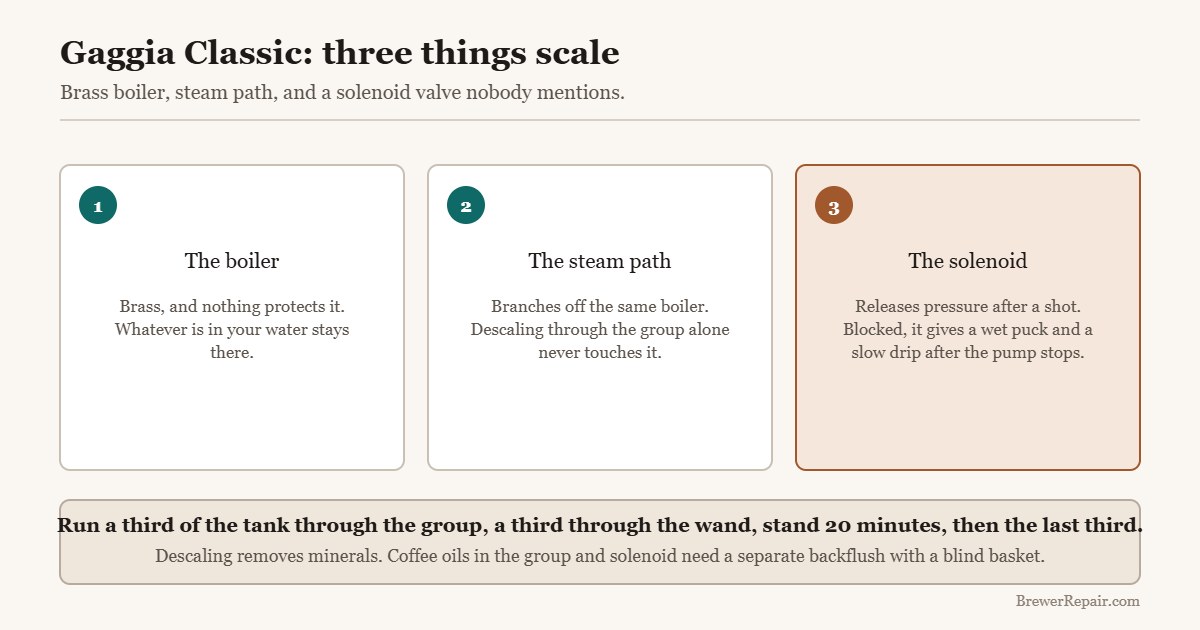
Run solution through the group AND the steam wand, stand twenty minutes, rinse with two tanks. Avoid vinegar - the Classic has brass and aluminium in the water path.
What you need before you start

The part you need
De’Longhi Descaler: EcoDecalk and What the Cycle Misses
Paid link. We earn a commission if you buy — the guides stay free.
Step by step
-
Strip and fill
Portafilter out, drip tray emptied, tank filled with solution.
-
Group first
About a third of the tank through the group into a jug.
-
Steam wand next
Another third through the wand. It branches off the same boiler.
-
Stand 20 minutes
Machine off, solution in the boiler.
-
Final third through the group
Then switch off.
-
Rinse two tanks
Clean water through both the group and the wand.
The Classic is a simple machine by design, and that simplicity is why it is still repairable decades in. It also means there is nothing clever protecting the boiler: whatever is in your water goes into brass and stays there. Descaling on schedule is the single biggest factor in how long one of these lasts.
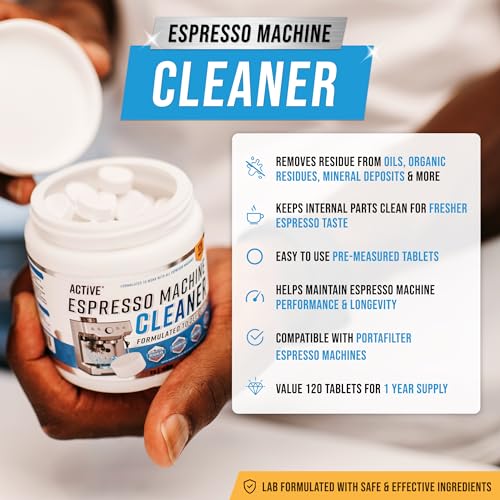
Descaler for a Classic:

Prime ACTIVE Espresso Machine Cleaning Tablets Descaling - 120 Tabs | Compatible with Breville Barista Express, Gaggia, Delonghi, Jura, Philips | Expresso Maker Backflush Oil Remover Solution Clean Tablet



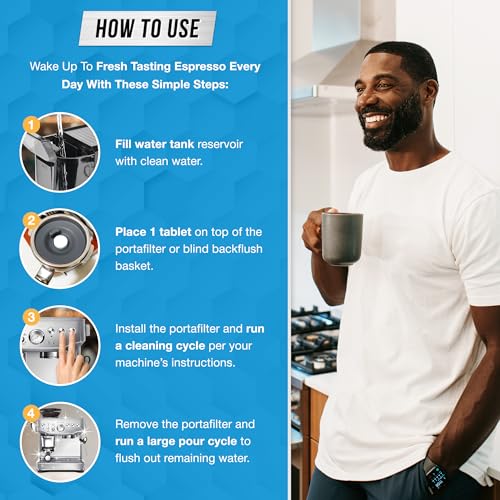

As an Amazon Associate we earn from qualifying purchases. Product prices and availability are accurate as of the date/time indicated.
How often
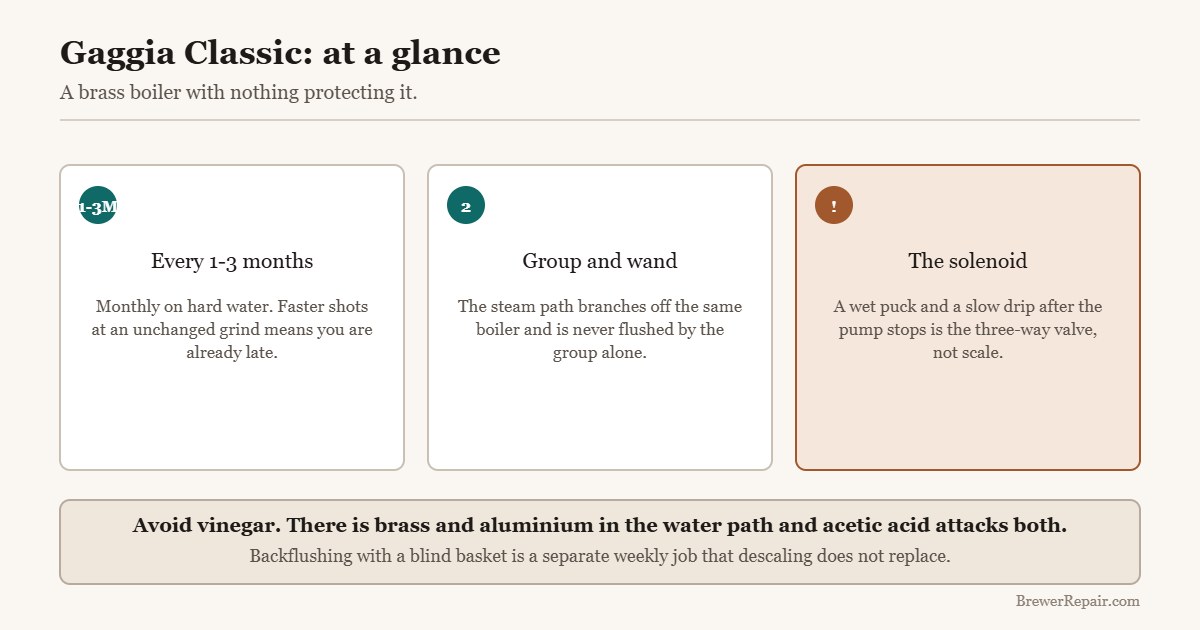
Every one to three months depending on water. Hard water and daily use puts you at the monthly end. Two symptoms say you are late: shots pulling faster than they used to at an unchanged grind, and steam that arrives wet and spluttering rather than dry.
What to use
A descaler intended for espresso machines, or citric acid solution. Gaggia sells its own. Avoid vinegar – the Classic has brass and aluminium in the water path and acetic acid attacks both over repeated use, and the smell survives an unreasonable number of rinse tanks.
The sequence that reaches everything
- Remove the portafilter and empty the drip tray. Leave the shower screen in place.
- Fill the tank with solution at the stated concentration.
- Run water through the group – about a third of the tank, into a jug. Switch on the brew switch and let it flow.
- Open the steam valve and run another third out through the wand. The steam path branches off the same boiler and is not flushed by the group alone.
- Let it stand. Switch off and leave the remaining solution in the boiler for twenty minutes.
- Run the last third through the group again.
- Rinse with two full tanks of clean water through both the group and the wand.
The solenoid nobody mentions
The Classic uses a three-way solenoid valve that releases pressure after a shot – it is what makes the puck come out dry rather than soupy. Scale and coffee residue build in it, and a partly blocked solenoid shows up as a wet puck, a slow drip from the group after the pump stops, or a shot that will not stop cleanly. Descaling helps, but a solenoid that has been neglected usually needs to come out and be cleaned properly. That is a known, documented job on this machine and it is the difference between a Classic that lasts five years and one that lasts twenty.
Backflushing is a separate job
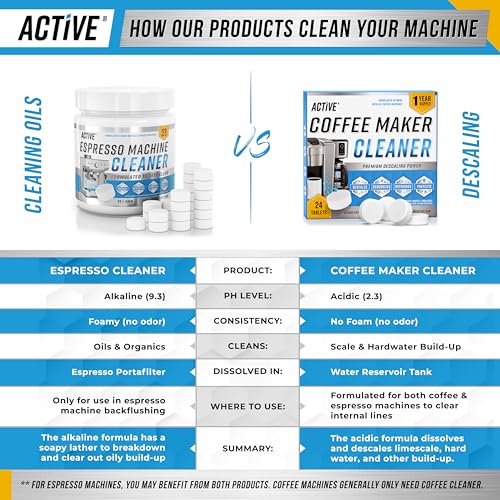
Descaling handles minerals. Coffee oils in the group and the solenoid need a backflush with a blind basket and detergent, weekly for daily use. The two jobs do not substitute for each other, and skipping the backflush is what eventually gums up the solenoid.
Three separate scale problems in one machine
The Classic’s simplicity is why it lasts and also why neglect shows up in three places at once.
The boiler is brass, holds water at temperature whenever the machine is on, and has nothing protecting it. The steam path branches off the same boiler; because steam leaves minerals behind as it evaporates, the wand tip scales even on machines that rarely steam. The three-way solenoid sits between the group and the drip tray and gets both scale and coffee residue.
The solenoid, in plain terms
When the pump stops, the solenoid opens briefly and dumps the pressure in the group down to the drip tray. That is what leaves a dry, liftable puck instead of a soup. When it is partly blocked, three things happen: the puck comes out wet, the group drips for a while after the shot, and the shot does not stop cleanly.
Descaling helps at the margins. A solenoid that has been neglected for years usually needs removing and cleaning properly — a well-documented job on this machine, and the main reason a Classic either lasts twenty years or dies at five.
Why the acid choice matters here
There is brass and aluminium in the water path. Acetic acid attacks both faster than citric or lactic acid does, and the damage is cumulative — one use looks harmless, which is why the habit persists. Add the smell, which survives an unreasonable number of rinse tanks in a machine with this much internal surface area.
An espresso-specific descaler or plain citric acid solution does the job without either problem.
Descaling and backflushing solve different failures
- Lost pressure, slow flow, weak steam — mineral scale. Descale.
- Dull, ashy or stale-tasting shots on fresh beans — coffee oil in the group and screen. Backflush with a blind basket and detergent.
- Wet pucks and post-shot dripping — the solenoid, which collects both and usually needs manual cleaning.
Doing one and expecting it to fix the other is the most common wasted afternoon on this machine.
A realistic schedule
Backflush weekly with detergent if you pull shots daily. Descale every one to three months depending on water. Clean the solenoid when the puck starts coming out wet, or every couple of years as prevention. Replace the group gasket when the portafilter starts leaking at the rim — it is a cheap part and a common cause of what looks like a pressure fault.
Related on BrewerRepair: Cleaning a Gaggia Brera and Breville Water Filter (BWF100) and Breville Portafilter.
Descaler for a Gaggia Classic
Espresso-specific descaler. Avoid vinegar on brass and aluminium.
De'Longhi EcoDecalk Universal Descaler, for Coffee Machines 16.90 oz
Common questions
Can I use vinegar in a Gaggia Classic?
Better not to. There is brass and aluminium in the water path and acetic acid attacks both over time.
Why is my puck wet after descaling?
That is usually the three-way solenoid valve, not scale. A blocked solenoid does not release pressure properly.
Does descaling replace backflushing?
No. Descaling removes minerals; backflushing removes coffee oils. Both are needed.
How often does a Gaggia Classic need descaling?
Every one to three months. Monthly on hard water with daily use.