Why Your Nespresso Tastes Burnt: Four Causes

Burnt-tasting Nespresso is usually one of four things: an intense dark-roast capsule doing exactly what it was designed to do, stale capsules past their date, scale in the boiler pushing water temperature around, or residue in the capsule holder. Rule out the capsule before touching the machine - it is the most common answer by a distance.
Causes, most likely first
Work down this list in order. The first two cost nothing to check.
- The capsule itself - intensity 10 and above are roasted dark and taste that way by design
- Stale capsules past their best-before date, where the oils have oxidised
- Limescale in the boiler causing uneven water temperature
- Old coffee residue in the capsule holder and around the exit
- A short shot - less water over the same coffee tastes harsher and more bitter
The fix, step by step
-
Change the capsule first
Try a lower intensity from a fresh sleeve. If the taste changes, you have your answer and the machine is fine.
-
Check the dates
Capsules past their best-before go flat and harsh. Nespresso capsules are sealed but not immortal.
-
Check the volume
A short shot concentrates everything, including the bitter compounds. If you have programmed a smaller cup, reset it to the default and taste again.
-
Clean the capsule holder
Empty the used capsule container, wash it and the holder properly with detergent rather than rinsing. Old coffee oil goes rancid and tastes exactly like burnt.
-
Run a rinse
Brew a full cup of water with no capsule, twice. This clears the exit path.
-
Then descale
If all of that has not changed anything, scale is affecting the brew temperature. Run a full cycle with a proper descaler and rinse afterwards.
Burnt is a specific complaint and it has an order of causes, most of which have nothing to do with the machine being faulty.
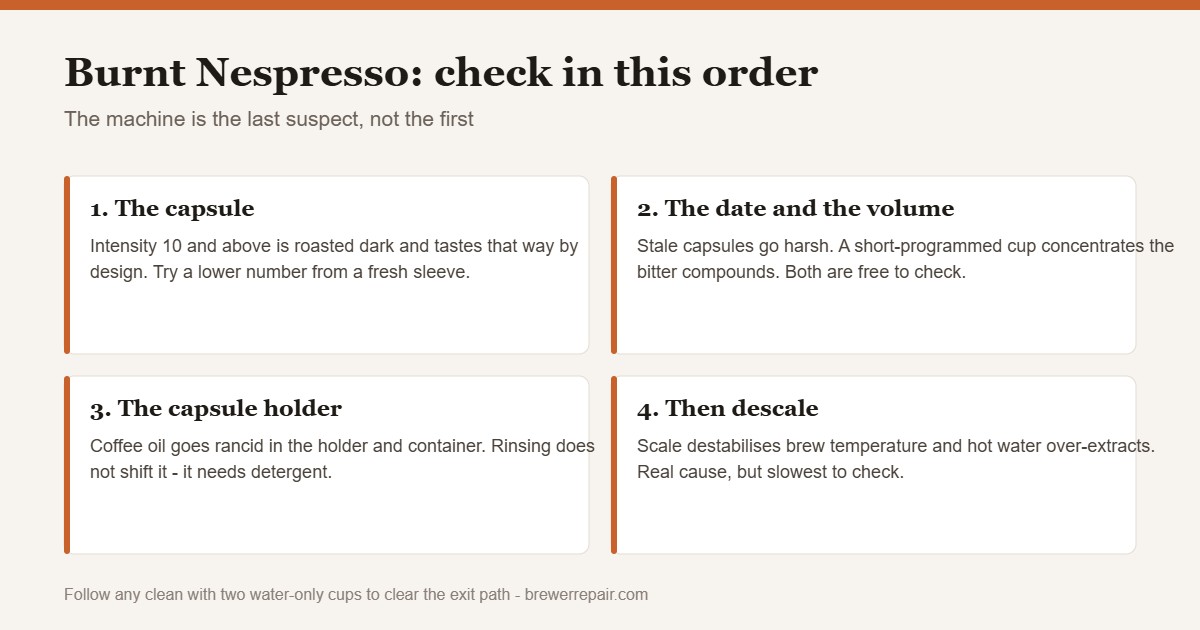
Start with the capsule
Nespresso prints an intensity number on every sleeve, and it means something. Anything from 10 upwards is roasted dark, and dark roast reads as burnt to plenty of people who would enjoy the same machine with an intensity 5. This is not a fault; it is the product doing what it says.
Try a lighter capsule from a fresh sleeve. If the taste changes, you are done, and you have saved yourself a descale.
Check the dates
Sealed capsules keep well but not forever. Past the best-before, the oils have oxidised and the coffee goes flat and harsh in a way that is easy to file under burnt. A sleeve that has been in the back of a cupboard for a year is a genuine suspect.
Check the volume before the machine
If the machine has been programmed to deliver a shorter cup than the capsule was designed around, everything concentrates – including the bitter compounds. This is a common accidental setting, because the volume is programmed by holding the button and it is easy to do without meaning to. Reset to default and taste again.
The capsule holder is dirtier than it looks
Coffee oil builds up in the holder and the used-capsule container and goes rancid there. A rinse under the tap does not shift it – it needs detergent and a proper wash. This is the cause that most often surprises people, because the machine looks clean.
Follow the wash with two full cups of water brewed with no capsule to clear the exit path.
Descale last, not first
Scale insulates the heating element and makes brew temperature wander, and water that runs too hot over-extracts into bitterness. It is a real cause. It is also the slowest and most expensive thing to check, which is why it belongs at the end of this list rather than the start.
Related
If the coffee is cool as well as harsh, a Nespresso that is not hot enough covers that separately. For the descale itself, what the cycle needs covers solution and rinsing, and the Vertuo guide has the button sequence.
If you need the part
Check the fitment chart against your model number before ordering — sizes that look identical often are not.

The part you need
Nespresso Descaling Kit: What the Cycle Needs
Paid link. We earn a commission if you buy — the guides stay free.
Questions people ask about this fix
Why does my Nespresso taste burnt?
Most often the capsule rather than the machine. Nespresso rates capsules by intensity, and anything from 10 upwards is roasted dark enough to read as burnt to a lot of people. Try a lower intensity from a fresh sleeve before doing anything to the machine.
Do Nespresso capsules go stale?
Yes. They are sealed, which slows it down, but the oils still oxidise over time and past the best-before date the flavour goes flat and harsh. If your capsules have been in a cupboard for a year, that is a likely cause.
Can limescale make coffee taste burnt?
Indirectly. Scale insulates the heating element, which makes water temperature less stable, and water that is too hot over-extracts and tastes bitter and burnt. It is a real cause but it is the fourth thing to check, not the first.
I cleaned everything and it still tastes burnt. Now what?
Check the cup volume. If the machine is programmed to deliver less water than the capsule was designed for, the shot concentrates and tastes harsh. Reset the volume to default and taste again before concluding anything is broken.
Does the capsule holder really affect taste?
Yes, more than people expect. Coffee oils accumulate in the holder and the used-capsule container and turn rancid. Rinsing does not remove them - it takes detergent and a proper wash.
Other Nespresso problems
Nespresso Not Hot Enough: Cup, Scale or Thermoblock
Espresso is a small volume of liquid in a cold ceramic cup. Most of the heat you are missing was never lost by the machine.
Nespresso Making a Loud Noise: What Each Sound Means
A Nespresso pump is loud by design. The sounds worth worrying about are the ones that changed, and each has a different cause.
Nespresso Vertuo Not Pumping Water: The Order to Check
A Vertuo that runs but pumps nothing is usually unprimed or blocked at the tank valve. Work through it before assuming the pump has failed.