Breville Not Building Pressure: Puck First, Machine Second

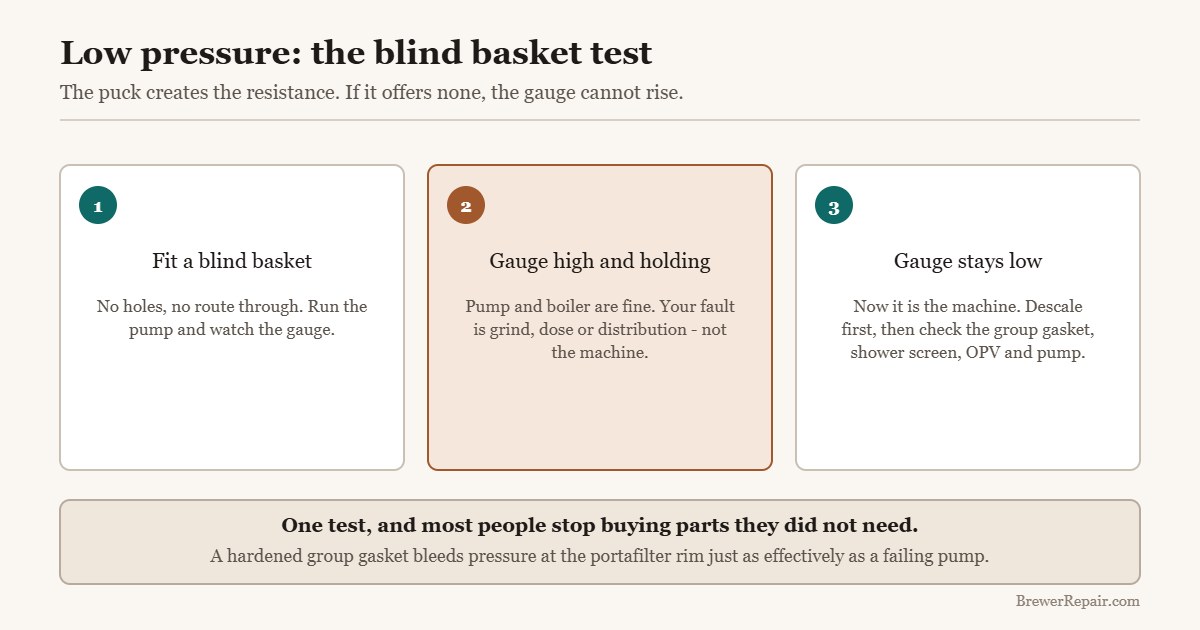
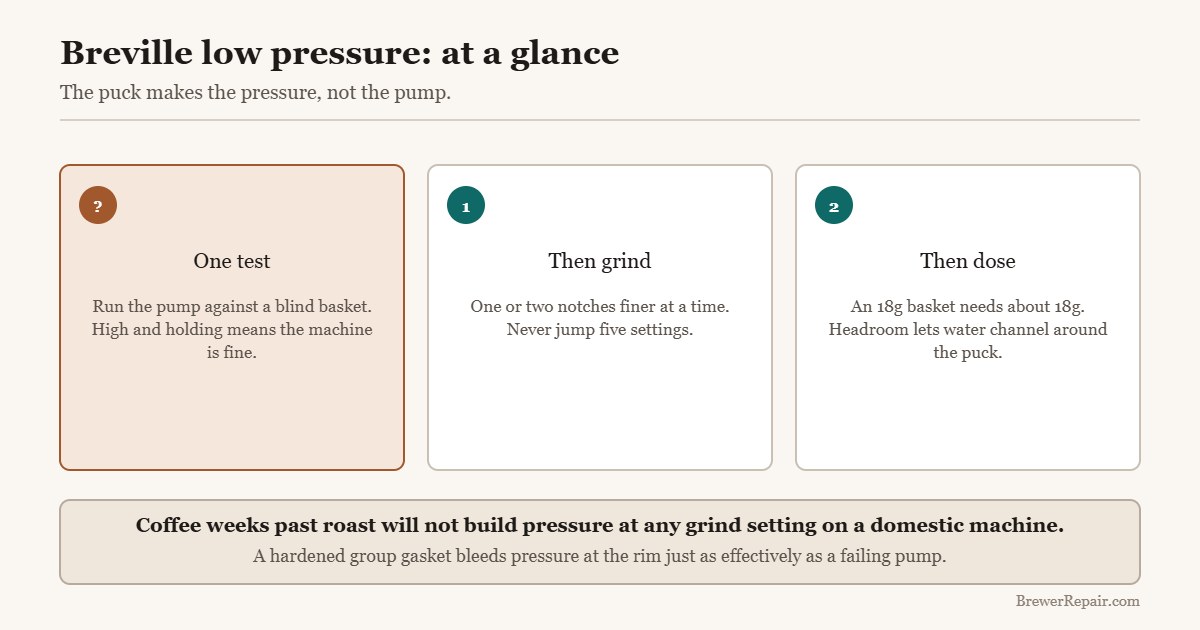
Run the pump with a blind basket. If the gauge goes high and holds, the machine is fine and the fault is grind, dose or distribution.
Causes, most likely first
Work down this list in order. The first two cost nothing to check.
- Grind too coarse for the basket
- Underdosing, leaving headroom for channelling
- Uneven distribution before tamping
- Single basket dosed like a double
- Stale or pre-ground coffee
- Hardened group gasket leaking at the portafilter rim
- Scale, then OPV or pump - only after the blind test
The fix, step by step
-
Blind basket test
Run the pump against a blind basket. High and holding means the machine is fine.
-
Grind finer in small steps
One or two notches, then pull a shot. Never jump five.
-
Weigh the dose
An 18g basket needs about 18g. Headroom causes channelling.
-
Level the bed before tamping
Tamping an uneven bed just compresses the unevenness.
-
Check the basket size
A single dosed like a double behaves exactly like low pressure.
-
Only then the machine
Descale first, then look at the gasket, shower screen, OPV and pump.
Low pressure on a Breville – the gauge barely moving, water gushing through, a shot finishing in ten seconds – is one of the most common complaints on these machines, and the machine is rarely the cause. The puck is what creates resistance. If the puck offers none, the pump has nothing to push against and the gauge stays low no matter how healthy it is.
What actually helps:

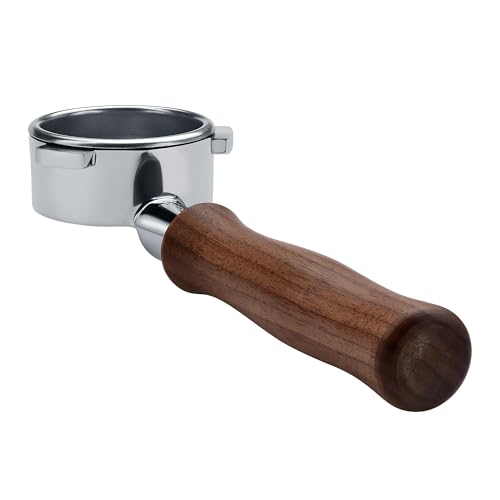
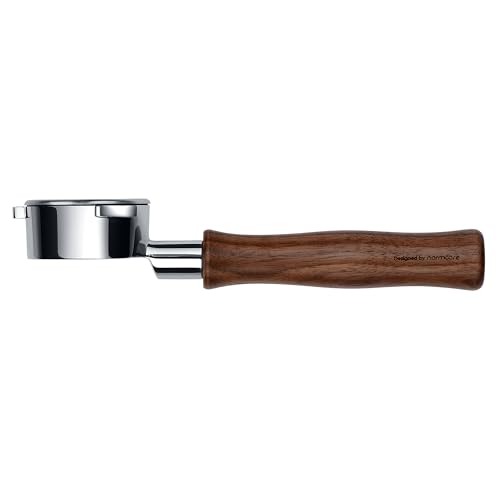
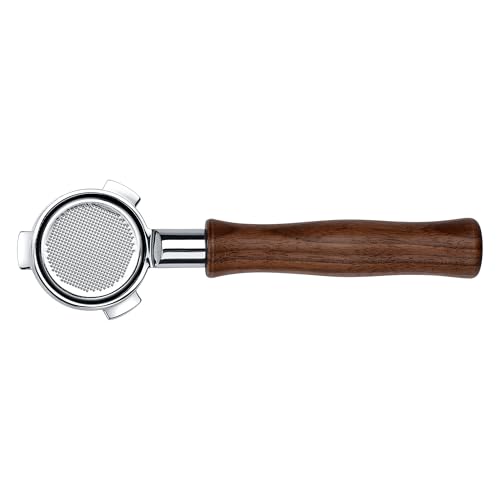
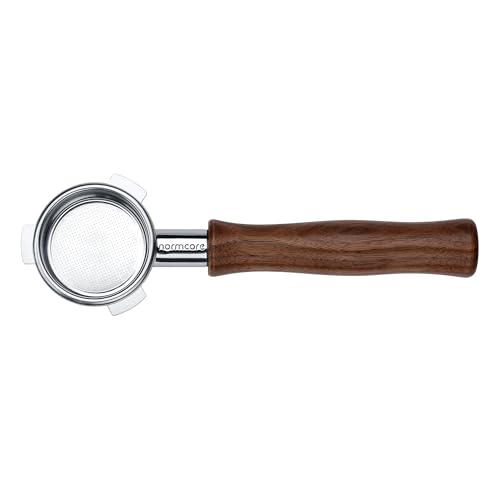
Prime Normcore 54mm Bottomless Portafilter, Naked Portafilter Fits Breville Sage Barista Express Machines, 18g Filter Basket Included, Genuine American Walnut Handle


As an Amazon Associate we earn from qualifying purchases. Product prices and availability are accurate as of the date/time indicated.
The test that settles it
Put a blind basket (the rubber disc, or a basket with no holes) in the portafilter and run the pump. With no route through, the gauge should swing straight into the espresso range and hold.
- Gauge goes high and holds – the pump and boiler are fine. Your problem is grind, dose or distribution.
- Gauge stays low even blind – now it is the machine. Pump, OPV or a leak internally.
That single test saves most people from buying parts they do not need.
If it is the puck (usually)
- Grind finer, in small steps. One or two notches at a time, then pull a shot. Do not jump five settings.
- Check the dose. An 18g basket needs about 18g. Underdosing leaves headroom, water channels around the puck and pressure never builds.
- Distribute before tamping. Level the bed – tap, or use a distribution tool. Tamping an uneven bed just compresses the unevenness.
- Tamp level rather than hard. Consistency matters more than force.
- Check the basket size. A single basket dosed like a double behaves exactly like this.
A bottomless portafilter shows this directly: spraying from one side is channelling, and channelling is the mechanism behind almost every low-pressure complaint.
Old beans and stale grind
Coffee that is weeks past roast, or pre-ground coffee, will not build pressure at any grind setting on a domestic machine. If the machine used to be fine with the same routine and only the bag changed, that is your answer.
If the blind test says it is the machine
Scale is the first candidate – a full descale through all three outlets. After that it is the OPV or the pump, both of which are inside the case. Before going further, check the shower screen is not blocked and that the group gasket is not so hardened that the portafilter no longer seals – a portafilter leaking at the rim bleeds pressure just as effectively as a bad pump.
Why the puck makes the pressure
A pump produces flow. Pressure only appears when something resists that flow, and in an espresso machine the only thing resisting is the coffee puck. Nine bars on the gauge is not the machine pushing hard; it is the puck pushing back.
That reframes every low-pressure complaint. If the gauge sits low, either the puck is offering no resistance — grind, dose, distribution — or the machine cannot generate flow. The blind basket separates the two in thirty seconds, because a blind basket is infinite resistance.
Grind, dose and distribution, in the order that matters
- Grind. Move one or two notches finer, pull a shot, and reassess. Jumping five settings overshoots and teaches you nothing about where the right point is.
- Dose. Weigh it. An 18g basket wants about 18g; underdosing leaves headroom above the puck and water pools there and escapes around the edge.
- Distribution. Level the bed before tamping. A tamp only compresses what is under it — it cannot fix a bed that is higher on one side.
- Tamp. Level matters more than force. Consistency between shots matters more than either.
Changing two of these at once is why people spend a month chasing the same shot.
Basket mismatches
A single basket dosed like a double produces exactly the low-pressure, fast-gushing shot people bring to forums. So does a pressurised basket used with pre-ground supermarket coffee once the beans go stale. Check which basket is actually in the portafilter before adjusting anything else — they are easy to swap by accident and easy to forget.
Coffee age
Beans more than three or four weeks past roast have lost the carbon dioxide that creates resistance and crema. Pre-ground coffee has lost it and gone stale on top. Neither will build pressure at any setting on a domestic machine, and no amount of adjustment substitutes for fresh beans.
If the machine used to work with the same routine and only the bag changed, that is the answer.
If the blind test says the machine is at fault
Work outward from cheapest:
- Group gasket — hardened gaskets bleed pressure at the portafilter rim. Cheap part, common cause, obvious symptom (drips at the rim during the shot).
- Shower screen — a blocked screen restricts flow before it reaches the puck.
- Scale — a full descale through all three outlets.
- OPV and pump — inside the case, and the point at which a service centre is the sensible answer.
Related on BrewerRepair: Breville Water Filter (BWF100).
What actually helps
A bottomless portafilter shows channelling directly. Descaler is for after the blind basket test says the machine is at fault.

If you need the part
Check the fitment chart against your model number before ordering — sizes that look identical often are not.

The part you need
Breville Portafilter: 54mm Sizing and Bottomless Options
Paid link. We earn a commission if you buy — the guides stay free.
Questions people ask about this fix
Why does my Breville gauge never reach the espresso range?
Usually because the puck offers no resistance. Grind finer and check the dose before suspecting the pump.
What does the blind basket test prove?
With no route through, a healthy pump drives the gauge high and holds it. If it does, the machine is fine.
Can old coffee cause low pressure?
Yes. Coffee weeks past roast, and most pre-ground coffee, will not build pressure at any setting.
My portafilter leaks at the rim as well. Related?
Yes. A hardened group gasket bleeds pressure just as effectively as a failing pump.
Other Breville problems
Breville Espresso Machine Leaking: Where to Look
Four places a Breville leaks, and the group head gasket accounts for most of them. How to tell it apart from an overfilled drip tray.
Breville Grinder Not Working: Jam, Residue or Motor
A Breville grinder that hums, stalls or produces nothing is nearly always jammed or gummed rather than broken. How to tell which, in order.