De’Longhi Milk Frother Not Working: Blocked, Not Broken

A De'Longhi frother that has stopped working is nearly always blocked with dried milk rather than broken. Milk sets hard inside the air intake and the narrow passages within hours of use. Strip the frother, soak the parts in warm water, clear the air hole with a pin, and it usually comes back.
Causes, most likely first
Work down this list in order. The first two cost nothing to check.
- Dried milk blocking the air intake hole - the single most common cause
- Frother parts not reassembled correctly after cleaning
- Milk too hot, too old, or the wrong type to foam well
- Scale in the steam circuit reducing steam pressure
- Automatic milk system needing its own clean cycle, separate from descaling
The fix, step by step
-
Strip the frother
Take the milk system or the frothing sleeve apart completely. On automatic models the carafe assembly separates into several pieces.
-
Find the air intake
There is a small hole that draws air into the milk stream. That hole is what makes foam, and it is the first thing to block.
-
Clear it with a pin
Work a pin or straightened paper clip through the air hole. Dried milk sets hard and will not rinse out.
-
Soak everything
Warm water, fifteen minutes, then rinse thoroughly. Do not use boiling water on the plastic parts.
-
Reassemble carefully
Parts fitted in the wrong order or the wrong way round will not froth. Check against the manual if unsure.
-
Test with cold fresh milk
Cold whole milk foams best. Warm or old milk foams poorly regardless of the machine.
-
Purge the steam
Run steam into an empty jug for a few seconds before frothing, to clear condensate from the wand.
-
Descale if steam is weak
If the steam itself is feeble rather than the frother being blocked, scale in the circuit is the cause.
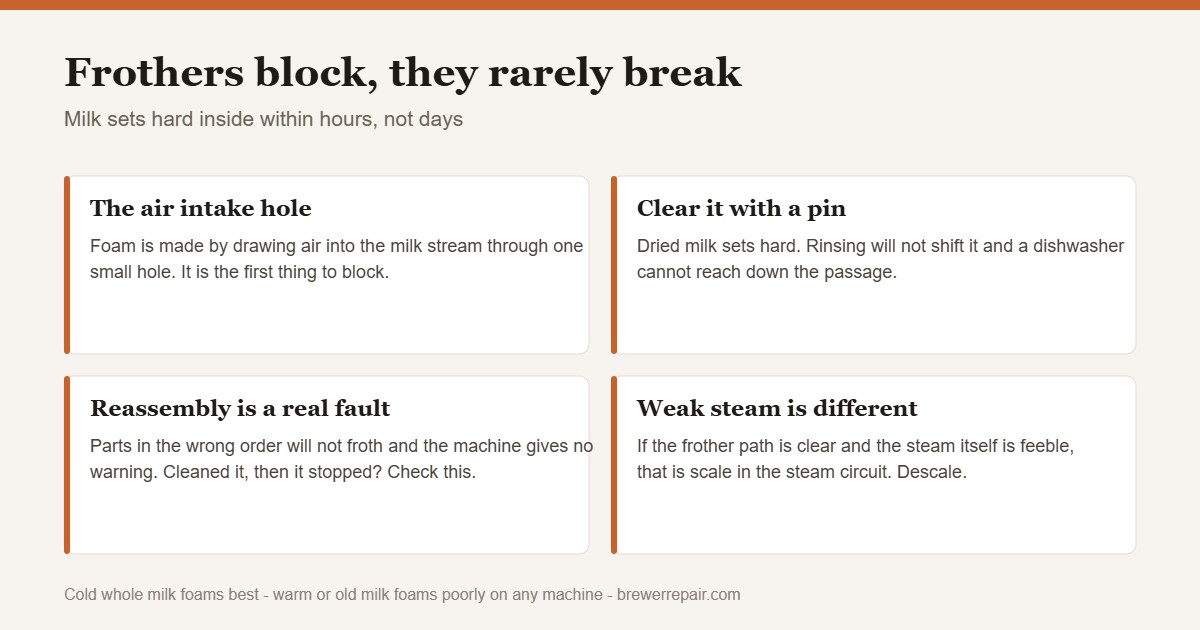
Milk frothers very rarely break. They block, and they block fast – dried milk sets inside the narrow passages within hours of use, not days.
The air hole is the whole thing
Frothing works by drawing air into a stream of milk through a small intake hole. That hole is narrow by design, it sits directly in the milk path, and it is the first thing to block. Once it is plugged you get hot milk and no foam, which is exactly what a broken frother looks like.
Take the assembly apart and find it. Work a pin or a straightened paper clip through. Dried milk sets hard enough that rinsing, and often dishwashing, will not shift it.
Strip it properly
On automatic models the milk carafe separates into several pieces, and milk gets into all of them. Take it as far apart as it goes. Soak the parts in warm water for fifteen minutes – warm, not boiling, since these are plastic – then rinse thoroughly.
Reassembly is a real failure mode
Parts put back in the wrong order or the wrong way round will not froth, and the machine gives you no indication that anything is wrong. If you cleaned it and it stopped working, suspect the reassembly before suspecting the machine. Check against the manual.
Rule out the milk
Cold whole milk foams best – fat and protein both contribute to stable foam. Warm milk, milk near its date, and several plant milks foam poorly regardless of how clean the machine is. Test with fresh cold whole milk before concluding anything.
Weak steam is a different fault
Separate the two symptoms. If the frother path is clear but the steam itself is feeble, the problem is upstream in the steam circuit, and scale is the usual cause. That needs a descale rather than a clean.
On a De’Longhi it is worth knowing that a flashing steam light on a Dedica is the descale alert rather than a steam fault – people clean the wand for weeks over that one.
Related
What the descale cycle needs covers solution and the rinse step. What each De’Longhi light means has the official answers, including the steam light. For bean-to-cup machines, the Magnifica Evo guide covers what the cycle misses.
If you need the part
Check the fitment chart against your model number before ordering — sizes that look identical often are not.

The part you need
De’Longhi Descaler: EcoDecalk and What the Cycle Misses
Paid link. We earn a commission if you buy — the guides stay free.
Questions people ask about this fix
Why is my De'Longhi milk frother not working?
Almost always dried milk blocking the air intake. Milk sets hard inside the narrow passages within hours, and the small air hole that draws air into the milk stream is the first thing to block. Clearing it with a pin usually restores it completely.
Where is the air hole on a De'Longhi frother?
On the frothing sleeve or the milk carafe lid assembly, depending on the model - a small hole that draws air in as milk passes. If you cannot see it, take the assembly apart further; it is on one of the internal pieces.
Can I put the milk frother parts in the dishwasher?
Check your manual, because it varies by model. Even where it is allowed, a dishwasher does not reliably clear the air hole - the passage is too narrow. Manual clearing with a pin is still needed.
The steam is weak, not the frother. What then?
That is a different problem. Weak steam pressure usually means scale in the steam circuit, and a descale is the fix. If the frother path is clear and steam is still feeble, start there.
Does milk type matter?
Yes. Cold whole milk foams best because fat and protein both contribute to stable foam. Warm milk, old milk and some plant milks foam poorly no matter how clean the machine is.
Other De'Longhi problems
De’Longhi Espresso Machine Not Pumping Water
A De'Longhi that has run dry needs priming, not repairing. The order to work through before concluding the pump has failed.
De’Longhi Espresso Machine Leaking Water Underneath
On a De'Longhi the drip tray and the internal condensate tray fill separately, and one of them has no float. That accounts for most of these.