Clogged Keurig: Needle, Water Line or Scale

A clogged Keurig is one of three things: coffee grounds packed into the entrance or exit needle, limescale narrowing the water line, or a blocked reservoir screen. Grounds block suddenly after a pod bursts; scale builds gradually over weeks. That timing is how you tell them apart before doing anything.
Causes, most likely first
Work down this list in order. The first two cost nothing to check.
- Grounds packed into the entrance needle in the brew head lid
- Grounds in the exit needle underneath the pod holder
- Limescale narrowing the water line - gradual, not sudden
- Reservoir outlet screen blocked with tank debris
- Air lock after the tank ran dry, which is not a clog at all
The fix, step by step
-
Date the problem
Sudden, right after a pod burst or a strong brew? Grounds. Gradual over weeks with the cup getting smaller? Scale. This decides everything that follows.
-
Clear the entrance needle
Lift the handle and look up into the brew head. Straighten a paper clip and work it into the needle from below, then wipe. Grounds pack in hard and are not always visible.
-
Pull the pod holder
Push up from underneath and draw it out. The exit needle underneath is the other half of the job - clear it the same way. Mind your fingers, it is sharp.
-
Rinse the holder
Run it under a hot tap and make sure water passes freely through the needle before refitting.
-
Check the tank screen
Take the reservoir off and look at the outlet. A small mesh screen there collects debris and gets ignored.
-
If it was gradual, descale
Needle cleaning will not touch limescale. Run a full descale cycle, then a rinse tank.
-
Purge an air lock
If the tank ran dry, hold the brew handle down and run a water-only brew with no pod to draw the air through.
Three different problems produce the same complaint. Sorting them out costs nothing and decides whether you spend two minutes or half an hour.
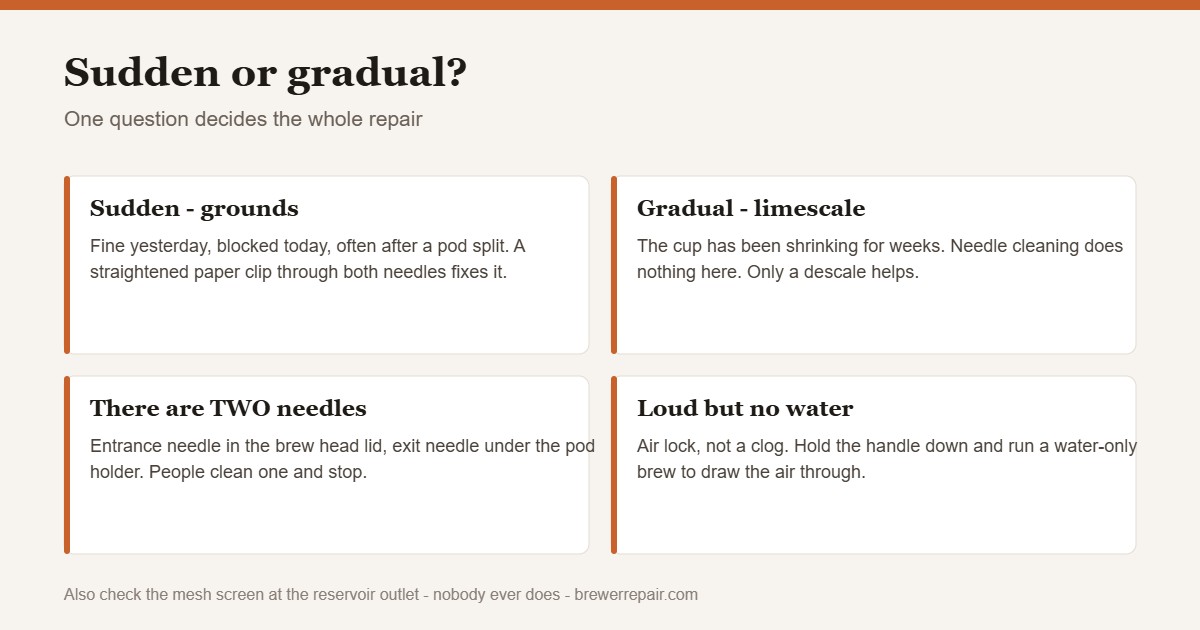
Sudden or gradual – the question that matters
This one question narrows it to a single cause. A machine that was fine yesterday and blocked today has grounds in a needle, usually after a pod split or a particularly fine grind. A machine where the cup has been getting slightly smaller for weeks has limescale.
They need completely different work, and doing the wrong one first is how people conclude their Keurig is dead.
There are two needles
People clean one and stop. The entrance needle is in the brew head lid, pointing down, and punctures the top of the pod. The exit needle is underneath the pod holder and punctures the base. Both clog, and grounds in the exit needle are the more common of the two because that is where the coffee actually goes.
Straighten a paper clip, work it into each needle, then flush. The exit needle is easier to reach with the pod holder removed – push up from underneath and draw the assembly out.
The screen everyone forgets
Take the reservoir off and look at the outlet in the machine. There is a small mesh screen there that collects whatever ends up in the tank, and nobody ever looks at it. If your water is not filtered, it accumulates.
The blockage that is not a blockage
If the tank ran dry and the machine has been noisy and unproductive since, that is an air lock rather than a clog. The pump is pushing air and cannot draw a prime. Hold the brew handle down and run a water-only brew with no pod – that pulls water through and usually clears it in one go.
When it is scale
Descaling is the only thing that helps here and needle cleaning is a waste of time. Run a full cycle and follow it with a clean rinse tank. The descaling guide covers the cycle and clearing the light afterwards.
Parts
The needle cleaning tool makes the exit needle easier to reach than a paper clip does. If the needle is bent rather than blocked, the pod holder is the part to replace, since the needle is moulded into it. Fitting a water filter cartridge slows how fast the scale comes back.
If you need the part
Check the fitment chart against your model number before ordering — sizes that look identical often are not.

The part you need
Keurig Needle Cleaning Tool: What It Does and When
Paid link. We earn a commission if you buy — the guides stay free.
Questions people ask about this fix
How do I unclog a Keurig?
Start by working out whether it was sudden or gradual. Sudden means grounds in a needle, and a straightened paper clip through both the entrance and the exit needle fixes it. Gradual means limescale, and only a descale will help.
Where are the Keurig needles?
There are two. The entrance needle is in the brew head lid, pointing down, and punctures the top of the pod. The exit needle is underneath the pod holder and punctures the base. Both clog and both need clearing.
Will descaling unclog my Keurig?
Only if the blockage is scale. Descaler dissolves mineral deposits and does nothing at all to packed coffee grounds. If the machine stopped suddenly rather than declining gradually, descaling is the wrong tool.
My Keurig makes noise but no water comes out. Is it clogged?
Possibly, but check for an air lock first. If the tank ran dry, the pump is trying to push air. Hold the brew handle down and run a water-only brew to draw water through and clear it.
Can I use a paper clip instead of the needle tool?
Yes, and for the entrance needle it works fine. The dedicated tool is easier for the exit needle because it reaches at the right angle, but a straightened clip and patience will do the same job.
Other Keurig problems
Keurig Coffee Tastes Burnt or Bitter: What Causes It
Burnt and bitter are different complaints with different causes, and the plastic in a Keurig holds onto old coffee oil in a way people underestimate.
Keurig Leaking Water From the Bottom: Find the Source First
Water under a Keurig comes from four places and only one of them needs a part. The paper towel test tells you which before you spend anything.
Keurig Will Not Turn On: Four Free Checks First
Lights but no brew is a different fault from no lights at all. Four checks that cost nothing, and the honest point where a Keurig stops being worth repairing.