Keurig Coffee Tastes Burnt or Bitter: What Causes It

Burnt or bitter Keurig coffee is usually old coffee oil in the machine rather than the pod. The pod holder, the exit needle and the drip area all accumulate residue that goes rancid. Wash them with detergent, run two water-only brews, then descale. Also check the cup size - a smaller setting over the same pod concentrates the bitterness.
Causes, most likely first
Work down this list in order. The first two cost nothing to check.
- Coffee oil residue in the pod holder and around the exit needle, gone rancid
- Cup size set smaller than the pod was designed for, concentrating the brew
- Limescale destabilising the brew temperature so water runs too hot
- Stale pods - sealed but not immortal, past their date they go harsh
- A dark roast pod doing what it was designed to do
The fix, step by step
-
Try a different pod
Change roast and check the date. If the taste changes, the machine was never the problem.
-
Check the cup size
A smaller setting pushes less water through the same coffee, which concentrates the bitter compounds. Try the largest size and taste again.
-
Wash the pod holder
Pull it out and wash it with detergent, not just a rinse. Coffee oil does not come off under a tap.
-
Clear the exit needle
Residue around the needle sits directly in the coffee path. Clear it and rinse the holder thoroughly.
-
Run two water-only brews
Largest cup size, no pod. This flushes the exit path.
-
Descale
Scale makes brew temperature wander, and water that runs too hot over-extracts into bitterness.
-
Fit a water filter
If your water is hard or heavily chlorinated, that comes through into the cup.
Burnt and bitter get used interchangeably and they are worth separating, because one usually points at the machine and the other usually points at how you are using it.
Free tests first
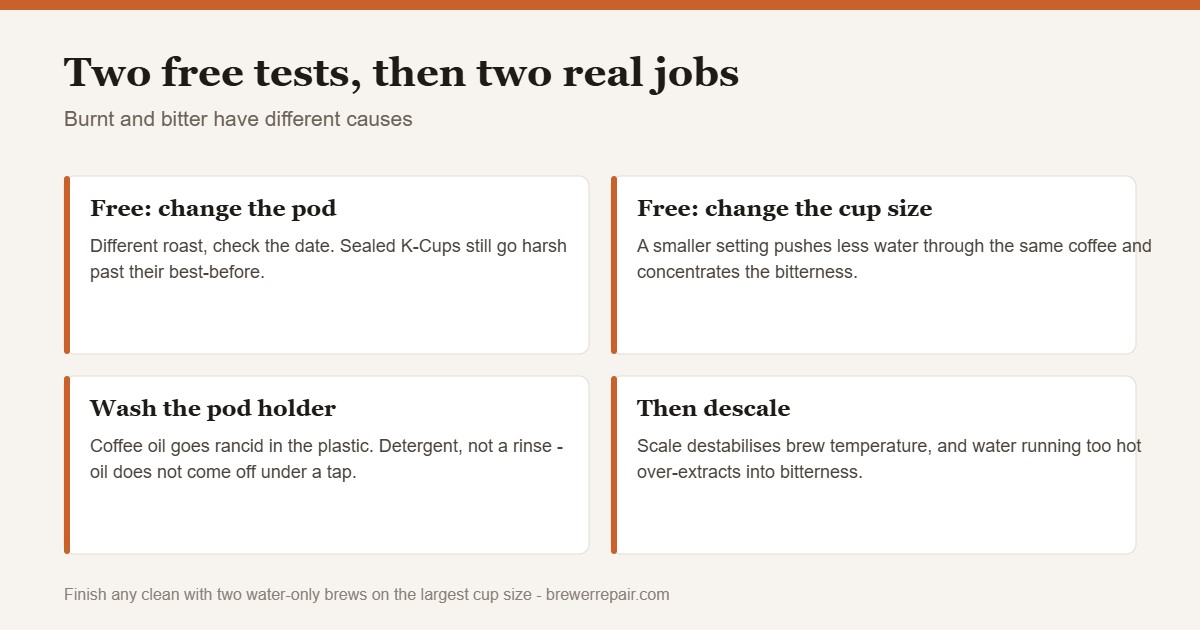
Two things cost nothing. Change the pod – a different roast from a fresh box, with the date checked. And change the cup size – if you are brewing on a smaller setting, less water is passing through the same coffee, and everything concentrates including the bitterness. Try the largest size once.
If either changes the taste, stop here.
The pod holder is the usual culprit
Coffee oil accumulates in the plastic of the pod holder and around the exit needle, and it goes rancid there. This is the cause people most often miss, because the machine looks perfectly clean.
Rinsing under the tap does not shift coffee oil. It needs detergent and a proper wash. Pull the holder out – push up from underneath and draw it towards you – and wash it properly, then clear the exit needle underneath while it is out.
Follow that with two water-only brews on the largest cup size to flush the exit path.
Then descale
Scale insulates the heater and makes brew temperature less stable. Water that runs too hot over-extracts, which tastes bitter and slightly burnt. It is a real cause, but it is slower and more expensive to address than washing a pod holder, which is why it comes second.
Water
Hard or heavily chlorinated water comes through into the cup, and no amount of cleaning changes that. A charcoal cartridge in the reservoir takes out chlorine and some mineral load, and it slows how fast scale returns. It will not rescue a dirty machine, but on a clean one the difference is noticeable.
Related
Which cartridge fits your model covers fitment and interval, the pod holder is the part to replace if it is cracked rather than dirty, and the descaling guide covers the cycle.
If you need the part
Check the fitment chart against your model number before ordering — sizes that look identical often are not.

The part you need
Keurig Water Filters: Which Cartridge Fits and How Often
Paid link. We earn a commission if you buy — the guides stay free.
Questions people ask about this fix
Why does my Keurig coffee taste burnt?
Most often old coffee oil in the pod holder and around the exit needle. It builds up, goes rancid and taints every cup. Rinsing does not remove it - the parts need washing properly with detergent.
Why is my Keurig coffee bitter?
Check the cup size first. Selecting a smaller cup pushes less water through the same amount of coffee, which concentrates everything including the bitter compounds. Trying the largest setting is a free test.
Will descaling fix bad-tasting coffee?
It helps when scale is destabilising the brew temperature, because water that runs too hot over-extracts and tastes bitter. But descaling does nothing about coffee oil residue, which is the more common cause. Clean first, then descale.
Do K-Cups go stale?
Yes. They are sealed, which slows it considerably, but past the best-before date the oils have oxidised and the coffee tastes flat and harsh. Check the date on the box before blaming the machine.
Does the water filter change the taste?
If your water is hard or heavily chlorinated, noticeably. A charcoal cartridge takes out chlorine and some of the mineral load. It will not fix a dirty machine, but on top of a clean one it makes a real difference.
Other Keurig problems
Clogged Keurig: Needle, Water Line or Scale
Three different blockages produce the same symptom. Which one you have decides whether the fix is two minutes with a paper clip or a full descale.
Keurig Leaking Water From the Bottom: Find the Source First
Water under a Keurig comes from four places and only one of them needs a part. The paper towel test tells you which before you spend anything.
Keurig Will Not Turn On: Four Free Checks First
Lights but no brew is a different fault from no lights at all. Four checks that cost nothing, and the honest point where a Keurig stops being worth repairing.