Keurig Not Brewing a Full Cup: Why Volume Drops

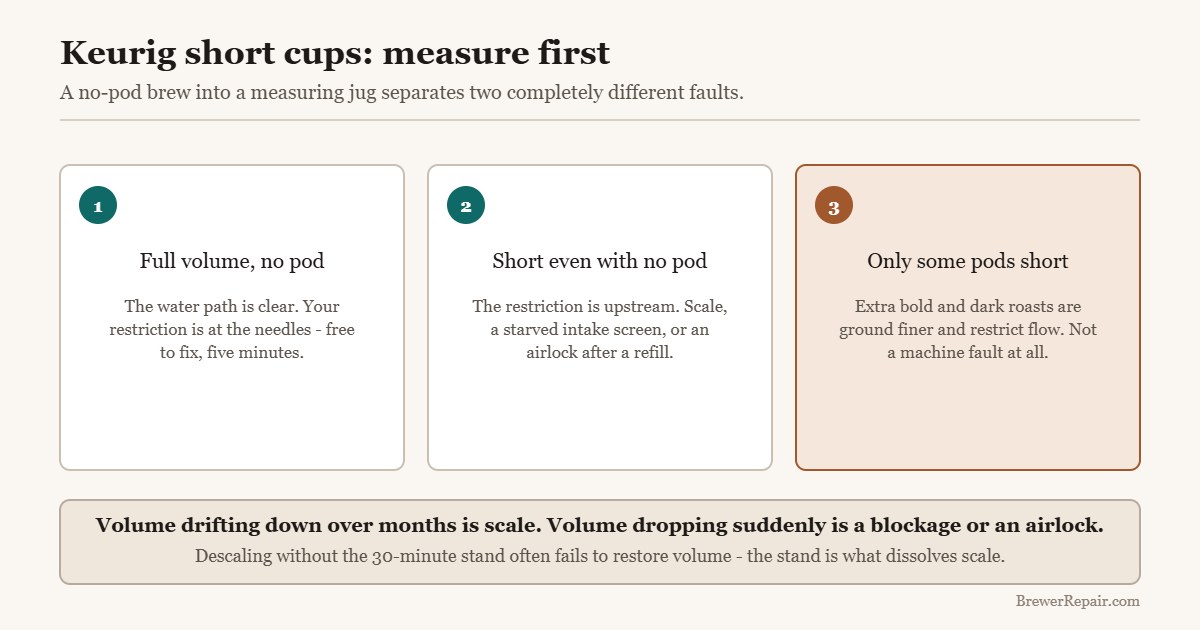
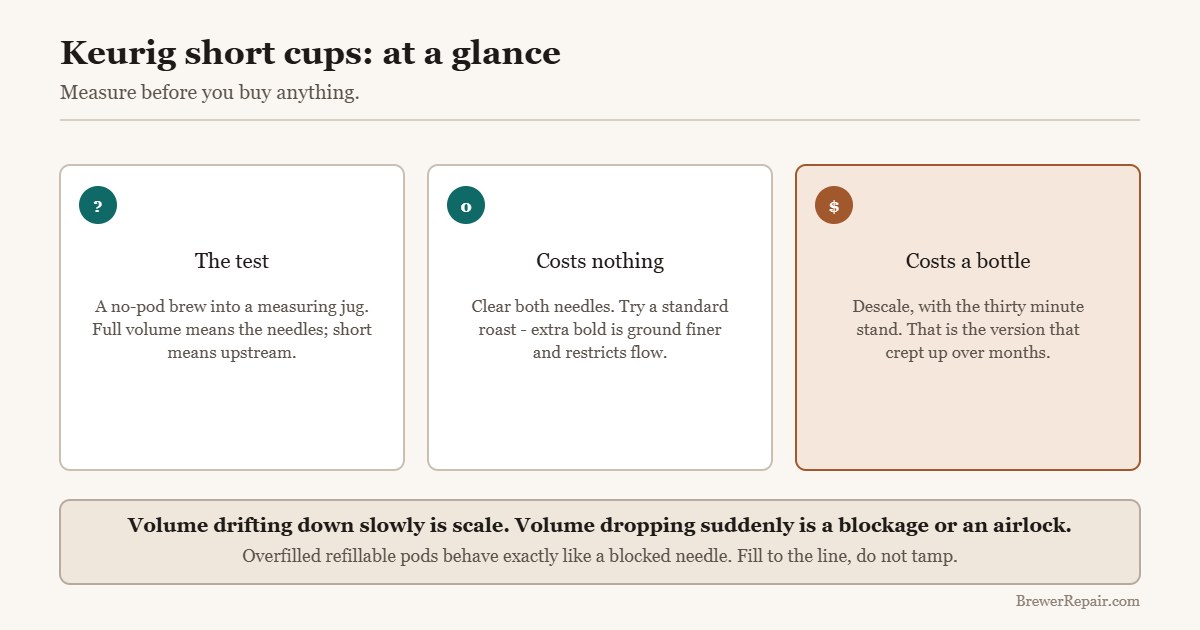
Measure a no-pod cleansing brew first. Full volume with no pod but short cups with one means the needles are partly blocked - the fix is free and takes five minutes.
Causes, most likely first
Work down this list in order. The first two cost nothing to check.
- Entrance or exit needle partly packed with grounds
- Finely ground or extra bold pods restricting flow
- Overfilled refillable pod
- Scale narrowing the internal lines
- Airlock after a refill
- Reservoir not fully seated
The fix, step by step
-
Measure a no-pod brew
Largest setting, no pod, into a measuring jug. This separates needle blockage from upstream restriction.
-
Clear both needles
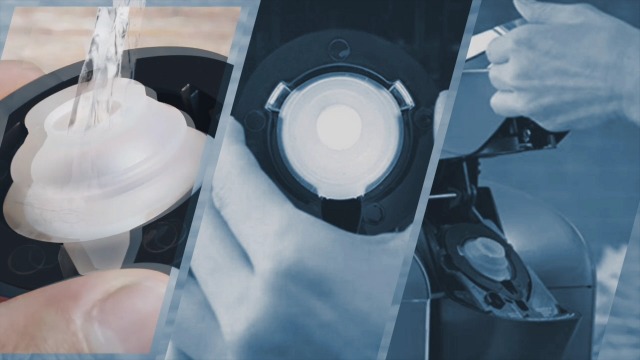
Unplug, lift the pod holder, clear the exit needle and both entrance needles.
-
Change pod type
Try a standard roast rather than extra bold to rule out grind restriction.
-
Descale fully
Including the 30 minute stand, if volume has been dropping for months.
-
Clear any airlock
Half-fill the tank, power down, shake, then run a no-pod cycle.
A Keurig that used to fill a mug and now delivers two thirds of one has a partial restriction somewhere in the water path. The machine still runs its full cycle and stops on time – it simply moves less water while it does. That distinction matters, because it rules out most electrical faults straight away.
What restores the cup size:

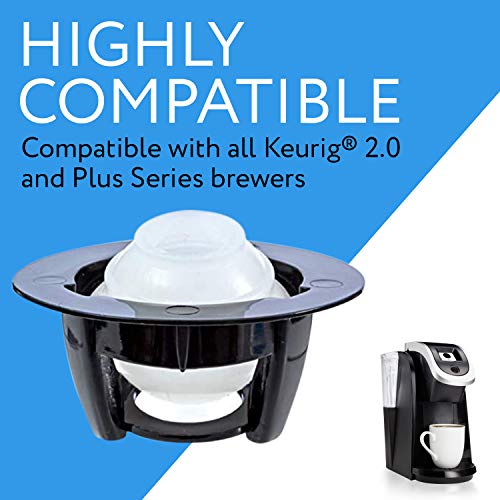
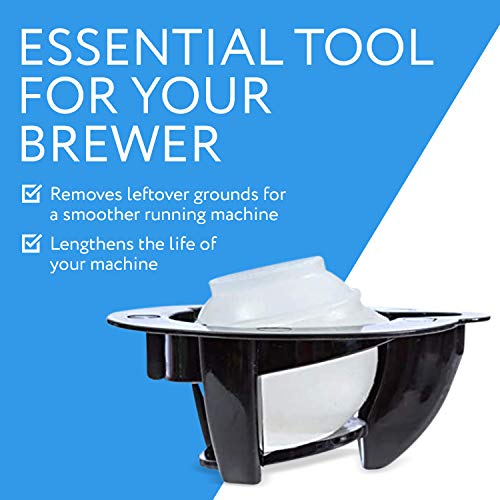
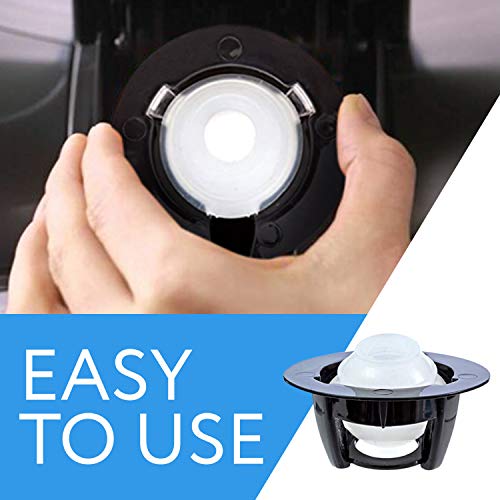
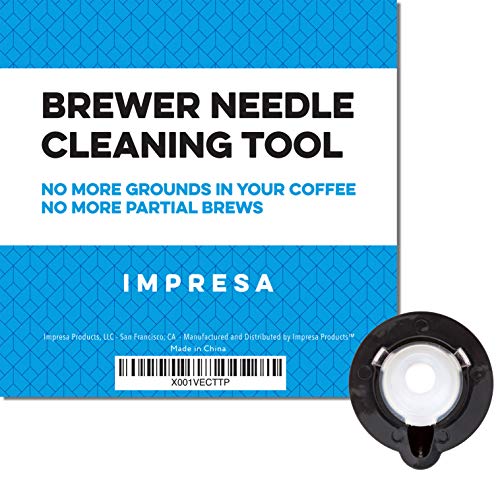
Prime IMPRESA Brewer Needle Cleaning Tool - Easy Maintenance & Needle Cleaner - Universal Declog Accessory & Compatible with Keurig 2.0 - Smooth Brewing & Ninja Unclog Accessory - 1 Count, Silicone


As an Amazon Associate we earn from qualifying purchases. Product prices and availability are accurate as of the date/time indicated.
Start with the cheapest cause
The entrance and exit needles pack with coffee grounds gradually, so the cup size shrinks over weeks rather than overnight. This is the cause in most cases, it costs nothing to fix, and it takes five minutes.
Unplug the machine, lift out the pod holder, and clear the exit needle from underneath and the two entrance needles in the lid with a needle tool or a straightened paperclip. Straight in, straight out.
Then check what the pod is doing
- Finely ground pods restrict flow. Some flavours – especially dark roasts and anything labelled extra bold – are ground finer and brew slower on the same machine.
- Refillable pods with too much coffee behave the same way. Fill to the line, do not tamp.
- A pod that has been pierced twice because the lid was opened and closed will leak into the holder rather than the cup.
Scale is the slow version of the same problem
If cup volume has been drifting down for months across every pod type, scale is narrowing the lines. A full descale with the 30-minute stand is the fix, and one that skips the stand often does not restore volume.
Air, not blockage
If the shortfall appeared suddenly right after a refill, it may be an airlock rather than a restriction. Fill the tank at least halfway, power down, lift the machine and give it a firm shake, then run a no-pod cycle.
What full-cup should look like afterwards
Run a cleansing brew on the largest setting with no pod and measure what comes out. If that delivers the full volume and a pod brew still does not, go back to the needles – one of them is still partly blocked. If even the no-pod brew is short, the restriction is upstream and the full diagnostic order applies.
Measure it, do not estimate it
“Short cup” covers everything from a barely noticeable difference to half a mug. Put a measuring jug under the outlet and run the largest cup size with no pod. Now you have a number, and you can tell whether the machine has lost 10% or 50% — which points at different causes.
A small, gradual loss across every pod type is scale. A large loss that appeared suddenly is a blockage or an airlock. A loss that only happens with certain pods is the pod, not the machine.
Why certain pods brew shorter
Grind size varies more between pod varieties than most people expect. Dark roasts and anything labelled extra bold are ground finer to compensate for lower density, and finer grounds restrict flow through the same needle. A machine that gives a full cup on a medium roast and three-quarters on an extra bold is behaving normally.
Refillable pods amplify this. Overfilling past the line, or tamping the grounds down, turns the pod into a restriction the machine was never designed to push through.
The double-puncture problem
Opening and re-closing the brewer with the same pod in place punctures the lid a second time. Water then takes the path of least resistance through the larger hole, bypasses part of the coffee bed, and some of it ends up in the holder rather than the cup. If you have ever opened the lid to check something mid-brew, that cup was always going to be short.
Scale, and why the stand matters
If the volume has been drifting down over months across all pods, the internal lines are narrowing. A descale fixes it — but only if it includes the thirty-minute stand. Running solution straight through and rinsing gives the acid a couple of seconds of contact per surface, which is not enough to dissolve established scale. This is the difference between a descale that restores volume and one that appears to do nothing.
Working through it in order
- Measure a no-pod brew. Full volume means the water path is fine.
- Clear both needles. Free, five minutes, fixes most cases.
- Try a standard-roast pod to rule out grind restriction.
- Reseat the reservoir and clean the intake screen.
- Full descale with the stand.
- Only then consider the pump — and on a pod brewer, consider replacement economics at the same time.
Still short after all of that? Weigh the cost of going further against a replacement — is a Keurig worth repairing.
What restores the cup size
Clear the needles first – it is free. The descaler is for the version of this that has been creeping up on you for months.

If you need the part
Check the fitment chart against your model number before ordering — sizes that look identical often are not.
The part you need
Keurig Needle Cleaning Tool: What It Does and When
Paid link. We earn a commission if you buy — the guides stay free.
Questions people ask about this fix
Why does my Keurig only fill half a cup?
Most often the entrance or exit needle is partly blocked with coffee grounds. Clearing them is free.
Do some K-Cup flavours brew shorter than others?
Yes. Extra bold and dark roasts are ground finer and restrict flow on the same machine.
I descaled and the cup is still short. What now?
Go back to the needles, and check the descale included the 30 minute stand rather than just a rinse.
Other Keurig problems
Keurig Coffee Tastes Burnt or Bitter: What Causes It
Burnt and bitter are different complaints with different causes, and the plastic in a Keurig holds onto old coffee oil in a way people underestimate.
Clogged Keurig: Needle, Water Line or Scale
Three different blockages produce the same symptom. Which one you have decides whether the fix is two minutes with a paper clip or a full descale.
Keurig Leaking Water From the Bottom: Find the Source First
Water under a Keurig comes from four places and only one of them needs a part. The paper towel test tells you which before you spend anything.